Five Files That Decide How Bad a Defect Gets: Recall-Ready QC Records
🚨 Here is the part of quality control that never makes a brochure: the damage from a bad batch is rarely decided by the defect.
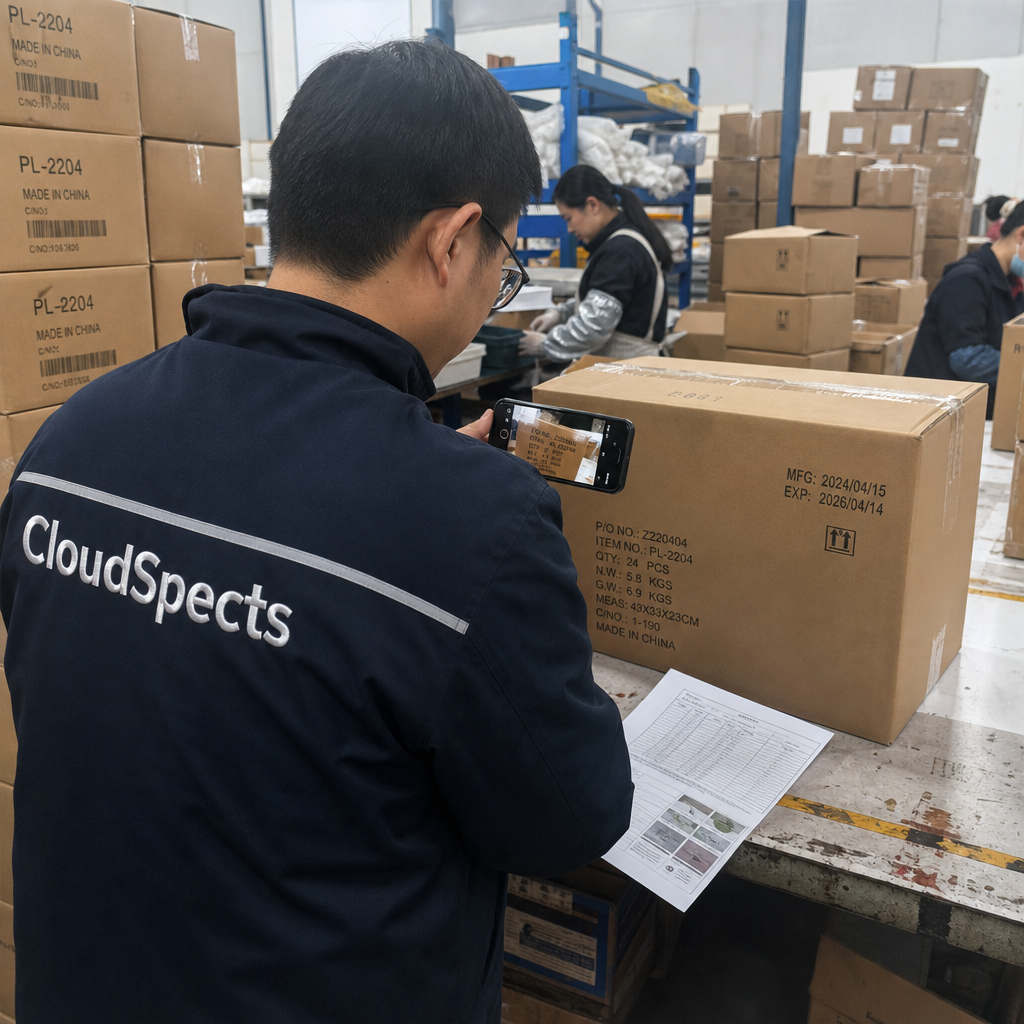
🚨 Here is the part of quality control that never makes a brochure: the damage from a bad batch is rarely decided by the defect. It is decided by your paperwork. One unit failing in a customer's hands is a $30 problem. The same unit failing when you cannot name which cartons it came from is a container-wide problem, because every unit becomes suspect and your only options are quarantine everything or hope. That is exactly why we ask for the date-code map before a visit starts rather than after a failure — the records are a by-product of a normal pre-shipment inspection China visit, not a separate project.
📁 A recall is not a product problem. It is a records problem.
Open any public recall database and read the entries properly. The factory's name rarely appears by itself. The importer's does. Once goods enter US commerce, the party that put them there carries the responsibility for knowing what they are and where they went — and "the factory promised me" has never once been an acceptable answer to a regulator, a platform or a plaintiff's letter.
So your exposure is bounded by the smallest group your records can identify. If a date code maps to a single production week, you quarantine 400 units and move on. If your records stop at the purchase order line, your suspect population is 12,000 units and you are now auditing your own inventory in a warehouse you don't own. 🧮
🧾 File 1 — The traceability map: date code to carton to PO
Six fields, one page per lot: the production date code as stenciled, the carton number range, the PO line, the quantity, the line or tool it ran on, and the lot of any safety-relevant component (cell, motor, PCB, glass).
Our inspectors photograph that code on 10–15 cartons per lot, top, middle and bottom of the stacks, because the finding that matters is the pallet that doesn't match its neighbours. On a 3,800-unit holiday order last winter, two of nine cartons carried a code six weeks older than the rest of the shipment. The map turned "the whole batch is suspect" into a 480-unit hold and a five-day rework instead of a container-wide quarantine. 📆
🔬 File 2 — The inspection report that names its own method
A report with no sample size is a mood, not a document. Page one needs four things: the sampling plan used (for example AQL 2.5 Level II, n=200, Ac 10), findings split into critical, major and minor, the instrument and method behind every measurement, and photographs that carry carton numbers so a photo ties to physical goods.
This is the file you hand a customer, a platform or an insurer — usually the only neutral account of the goods as they were. Ours are written the same day and typically reach the buyer in about 24 hours, with the raw measurement sheet attached.
🧪 File 3 — Test reports, only where the category demands them
Be honest about this boundary: plenty of sellers learn it the hard way. A third-party inspection verifies physical evidence. It does not manufacture compliance. We can confirm that a report exists, that the model, holder and construction described on it match the goods and the shipping documents, and that the part markings match the report's description. We cannot turn a visual visit into a certificate — and an inspector who offers to is selling you a document, not a service. ⚠️
🛠️ File 4 — The corrective-action log
When a supplier fixes something, this log is what proves it six months later: the problem statement with numbers, the root cause at process level rather than "worker carelessness", the escape point, the change that was made (with the tooling or fixture record), measurements before and after on the same instrument, and the batch where effectiveness was actually verified.
Without the log, every future failure restarts the same argument from zero.
✍️ File 5 — The clauses that move cost back to the factory
Two sentences in a supplier agreement do more than ten firm emails. First: the supplier bears the cost of containment, rework, return freight and customer credits when a defect traceable to their production escapes inspection. Second: they will answer a traceability request within five working days — batch records, component lots and process parameters for the codes in question. Neither clause needs a lawyer if it is agreed before the first order, and both become nearly impossible to add once a container is on the water. 🤝
📊 What each missing file costs you
| File | What it does when a defect escapes | What its absence costs |
|---|---|---|
| Traceability map | Names the suspect cartons and dates | Whole container quarantined or shipped anyway |
| Inspection report | Neutral record of condition and sampling | No evidence in a claim; "he said, she said" |
| Test reports | Matches model and holder to goods | Platform takedown while you chase documents |
| Corrective-action log | Shows the failure was closed | Same defect recurs, argument restarts |
| Cost-shifting clauses | Sends the rework bill upstream | You fund the supplier's mistake |
📸 The four photos we take on every lot
Documents first, opinions later. On every visit our inspectors capture: the stenciled date code on cartons from the top, middle and bottom of each stack; the FNSKU or shipping label on those same cartons, so the code and the label are provably one unit; the measuring instrument in the same frame as the part it measured, because a bare number settles nothing; and the sealed cartons and pallet wrapping before anything is opened.
That last set ends the most arguments — it is the only photo of the goods in the state they arrived in. 📷
⏰ Why the calendar makes this urgent right now
Q4 production compresses everything: shorter runs, temporary staff, night shifts, subcontracting, and a container leaving on a date set eight weeks ago. Traceability cannot be built during that crunch, so it has to exist before it — and the returns from October arrive in January, when the codes and the measurements are the only things that can still save money.
Every claim we have watched succeed had the same shape: a specific population, a dated report and a declared method. Every claim we have watched fail had a story. 💡
❓ FAQs
If I can only keep one file, which one?
The traceability map. Reports decay — factories change staff, photos get lost and old platforms delete listings — but a page that ties a date code to a carton range is what turns a defect into a bounded population. Without it, every other file describes a problem you cannot size.
Can a third-party inspection report be used as evidence in a claim?
It is strong evidence of condition and method on a given date, and it is normally the only neutral account of the goods. Whether it triggers a payment or a cost shift depends on your agreement, which is why the clauses and the report belong together. We keep reports retrievable and attach the measurement sheet.
How long should a supplier keep batch records?
Longer than your warranty window, because claims arrive at the end of it. In practice that means component lots, process parameters and the carton-to-code mapping held for at least three years, in a form a new production manager can still read after the original staff have left.
What if the supplier refuses to declare a date code?
Treat the refusal as a finding in itself. Workarounds exist — sequential carton numbers, a separate FNSKU shipment per production run, a sealed and signed sample from each lot — but a supplier who will not say when goods were made is a supplier whose quality cannot be traced later. Price that risk in.
Does this apply to small orders?
Yes, and it is cheaper than people assume. Traceability work scales with visits, not with PO value, so a 600-unit order gets the same one-page map as a container. Small orders are where the paperwork is missing most often — and where a recall hurts most.
💵 Pricing and how to book
Inspections are $169 per man-day, plus travel where the factory is outside our usual Guangdong, Zhejiang and Jiangsu routes, and we have completed 2,000+ inspections for importers selling on Amazon and beyond. Booking a visit and asking for the traceability map in the same message costs nothing extra — see inspection pricing, check your sample size on the AQL calculator, or contact us with the PO and the factory address for a same-day quote.
Frequently asked questions
If I can only keep one file, which one?
The traceability map. Reports decay — factories change staff, photos get lost and old platforms delete listings — but a page that ties a date code to a carton range is what turns a defect into a bounded population. Without it, every other file describes a problem you cannot size.
Can a third-party inspection report be used as evidence in a claim?
It is strong evidence of condition and method on a given date, and it is normally the only neutral account of the goods. Whether it triggers a payment or a cost shift depends on your agreement, which is why the clauses and the report belong together. We keep reports retrievable and attach the measurement sheet.
How long should a supplier keep batch records?
Longer than your warranty window, because claims arrive at the end of it. In practice that means component lots, process parameters and the carton-to-code mapping held for at least three years, in a form a new production manager can still read after the original staff have left.
What if the supplier refuses to declare a date code?
Treat the refusal as a finding in itself. Workarounds exist — sequential carton numbers, a separate FNSKU shipment per production run, a sealed and signed sample from each lot — but a supplier who will not say when goods were made is a supplier whose quality cannot be traced later. Price that risk in.
Does this apply to small orders?
Yes, and it is cheaper than people assume. Traceability work scales with visits, not with PO value, so a 600-unit order gets the same one-page map as a container. Small orders are where the paperwork is missing most often — and where a recall hurts most.