How to Make Your China Factory Take QC Seriously: 3 Transparency Principles
Every week we hear the same sentence from a first-time buyer: "The factory said no problem. " 💬 Then the container lands and "no problem" turns into a 9% defect rate, a chargeback, and a listing that sinks to page four.
Every week we hear the same sentence from a first-time buyer: "The factory said no problem." 💬 Then the container lands and "no problem" turns into a 9% defect rate, a chargeback, and a listing that sinks to page four. After 2,000+ inspections, we can tell you the difference between factories that take QC seriously and factories that don't — and it has nothing to do with how friendly the salesperson is.
Here is the pattern we see again and again. The buyer who gets clean goods is not the one who shouts louder or threatens harder. It is the one who built a system so the factory knows exactly what will be measured, sees the measurement happen, and understands the financial consequence of failing. That system is simple enough to describe in one conversation — and we have watched it change supplier behavior on orders worth anything from $8,000 to $800,000. 👇
Why "no problem" means "no plan"
Here is the uncomfortable truth about China sourcing: verbal promises evaporate under production pressure. The factory that nods along on WeChat today is the same factory that runs out of time, out of material, and out of patience on day 19 of a 21-day lead time. 🔥
The factories that deliver clean goods are not the ones with the best excuses. They are the ones with the clearest standards. In our experience those factories share three habits — we call them the three transparency principles, and any buyer can install them on the next order.
Principle 1: Put the standard in the contract, not in WeChat
The single most effective QC move costs nothing: write the standard into the order before production starts. 📋 That means the AQL level (for most Amazon FBA orders that is AQL 2.5), the defect definitions with a photo of what acceptable looks like, the sampling plan, and a rework clause with a reinspection fee.
Why does this work? Because a factory schedules what it is measured on. A written AQL clause gets planned for — the line pre-checks, the QC room staffs up, the packing team double-counts. A verbal request gets a smile.
| How the standard is communicated | What the factory hears | What usually happens |
|---|---|---|
| WeChat message: "please check quality well" | A suggestion | 30–50% of details quietly skipped |
| Contract clause: AQL 2.5, defect photos, rework terms | A commitment | Line pre-checks before inspection day |
| On-site joint review with caliper + photos | Evidence being collected | Disputes settled on the spot |
| AQL verdict tied to balance payment | A financial consequence | Long-term behavior change |
Principle 2: Review the findings together, on the spot
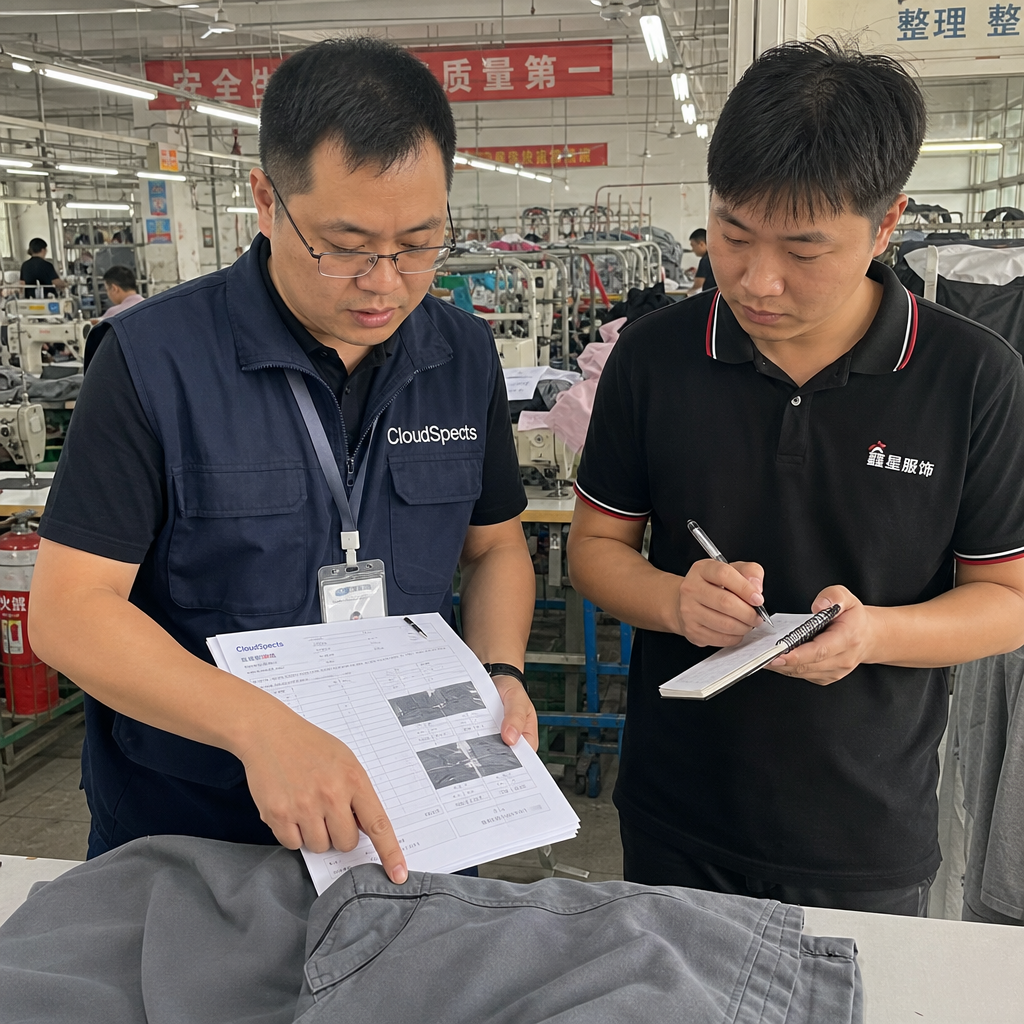
Our inspectors do not disappear into a corner with a clipboard. The inspector and the factory manager walk the sample table together: caliper readings, close-up photos, the defective unit next to the approved sample. 📏 That 20-minute joint review is where most disputes die.
When the factory manager sees the 2.3 mm gap measured on their own product, next to the 1.0 mm spec they signed, the conversation stops being about blame and becomes about the fix. We have watched this exact scene hundreds of times — it is faster, cheaper and far more effective than any angry email you can send from home.
There is a second, quieter benefit to the joint review: the factory's own QC staff learns the standard from the person applying it. After two or three orders with the same inspector, the factory's line checkers start catching the same defects before we arrive. That is not luck — that is training, delivered for free, paid for by your inspection fee.
Principle 3: Let the report do the arguing
Numbers beat opinions. "22 of 200 sampled units have a visible bubble larger than 1 mm on the lid surface" is not an opinion — it is an 11% major defect rate, and under AQL 2.5 that is a fail. ✅ The factory cannot argue with its own measurement, and you do not have to argue at all.
Your inspection report lands within about 24 hours of the visit, with photos, measurements and the verdict. It becomes the document you hold up when the balance payment is due. 💰 Factories know this — which is exactly why they start taking QC seriously.
Case study: the silicone kitchenware order that taught a factory to pre-check
One of our recurring clients imports silicone kitchenware sets — 6,000 units, $34,800 on the first order. The factory's salesperson was charming right up until the inspection day, when the sample table showed small bubbles on the lid surfaces. "Every factory has bubbles," the manager said. "This is normal."
It was not normal, because the order said so: bubbles larger than 1 mm on visible surfaces = major defect, AQL 2.5, 200 sampled units. On the spot, our inspector and the factory manager measured every flagged unit together. 22 units failed the bubble rule — 11% majors, verdict: fail. The factory reworked 640 pieces in six days at $2,400. Had the batch shipped as-is, an 11% defect rate on Amazon would have cost roughly $9,700 in returns, refunds and lost ranking — and probably the listing itself.
That factory now pre-checks every batch before we arrive. Not because we asked nicely. Because the standard was written, the review was joint, and the data did the arguing. 🔍
What changes after three orders
This is the part buyers rarely believe until they see it: the third order is easier than the first. On order one, the factory learns your standard the hard way, at the inspection table. On order two, their line checkers already know what you will measure, so defects drop before the inspector walks in. On order three, the salesperson stops promising and starts scheduling — pre-production samples land on time, reworks shrink from days to hours, and your defect rate settles into a boring, profitable range.
We have seen this curve repeated across hundreds of accounts. The factories that started defensive end up treating the inspection visit as a free audit of their own line. When that happens, you are no longer paying for policing — you are paying for a production partner who happens to live 8,000 miles away and ships on time. 🚀
FAQs
Why does my factory ignore my QC requirements?
Usually because the requirements were never written into the contract with consequences. A verbal 'please check quality' request has no teeth on a busy production line. When the AQL level, defect definitions and rework clause are in the signed order, the factory plans for them and compliance jumps.
Should I share the inspection checklist with the factory before the visit?
Yes — transparency is the whole strategy. Factories that know the exact standard in advance fix most issues before the inspector arrives, which means fewer fails, faster reworks and a cheaper order for you. The only thing to keep private is your bottom-line price.
What if the factory argues the defects are "normal"?
The report answers with numbers: measured deviation vs the spec, photos of each defect, and an AQL verdict calculated on the spot. It is very hard to argue with your own caliper reading. That is why joint on-site review settles disputes in minutes instead of emails.
Do factories get angry when a third-party inspector shows up?
A few do, on the first order. But factories that have worked with inspectors for years treat the visit as a free pre-shipment check for themselves. The three principles — standard in the contract, joint review, data-based verdict — turn most defensive factories cooperative within one or two orders.
How fast do I get the report after the visit?
Within about 24 hours of the inspection. The report includes photos, measurements, the AQL verdict and the count table, and it becomes your negotiation document before you release the balance payment.
Pricing and How to Book
Independent quality inspection starts at $169 per man-day, quoted and locked before booking — no per-unit fees, no surprise add-ons. Our inspectors are based in China, speak the factory's language, and work to your written standard. Contact CloudSpects for a same-day quote and put these three principles on your next order. 🚀
Frequently asked questions
Why does my factory ignore my QC requirements?
Usually because the requirements were never written into the contract with consequences. A verbal 'please check quality' request has no teeth on a busy production line. When the AQL level, defect definitions and rework clause are in the signed order, the factory plans for them and compliance jumps.
Should I share the inspection checklist with the factory before the visit?
Yes — transparency is the whole strategy. Factories that know the exact standard in advance fix most issues before the inspector arrives, which means fewer fails, faster reworks and a cheaper order for you. The only thing to keep private is your bottom-line price.
What if the factory argues the defects are "normal"?
The report answers with numbers: measured deviation vs the spec, photos of each defect, and an AQL verdict calculated on the spot. It is very hard to argue with your own caliper reading. That is why joint on-site review settles disputes in minutes instead of emails.
Do factories get angry when a third-party inspector shows up?
A few do, on the first order. But factories that have worked with inspectors for years treat the visit as a free pre-shipment check for themselves. The three principles — standard in the contract, joint review, data-based verdict — turn most defensive factories cooperative within one or two orders.
How fast do I get the report after the visit?
Within about 24 hours of the inspection. The report includes photos, measurements, the AQL verdict and the count table, and it becomes your negotiation document before you release the balance payment.