One Order, Two Factories: How to Split Production Without Doubling the Risk
Putting one purchase order into two factories looks like the obvious way to de-risk a season: if one line slips, the other covers you.
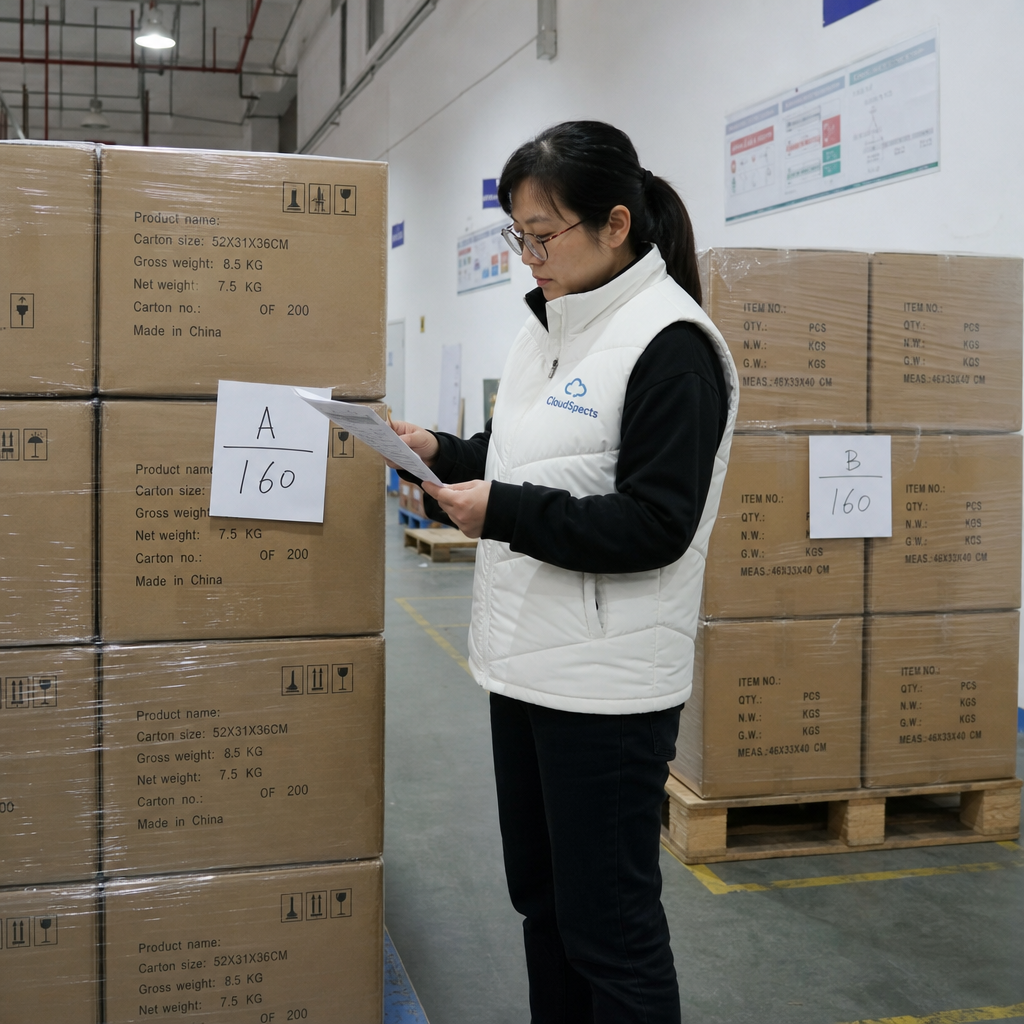
Putting one purchase order into two factories looks like the obvious way to de-risk a season: if one line slips, the other covers you. What the plan usually forgets is that a split order stops being one order the moment two buildings start work. Two date codes, two carton-mark sets, two quality records and, in the worst case, one factory quietly covering for the other. In practice the only version of this that holds up is a split visited per lot: two sub-quantities, two pre-shipment inspection in China visits, two reports and two releases of balance payment.
🔀 Why Buyers Split an Order at All
Four reasons cover almost every split we see in the field:
- Capacity. One factory cannot fit the whole quantity into your sailing window, so the order is shared instead of delayed.
- Risk spreading. A broken mould, a fire, a labour gap or an equipment failure then exposes only part of the order.
- Price leverage. A second quote keeps the primary supplier honest, and the split proves you meant it.
- Routes and ports. Two sites can ship from two ports, which matters when one lane is congested.
All four are legitimate. None of them changes the arithmetic of quality: you now own two production lots, and a sample drawn from one tells you nothing about the other.
⚠️ What Actually Changes When You Split
| Item | Single factory | Split order |
|---|---|---|
| Lot and sample plan | One lot, one AQL draw | Two lots, two draws — one sample cannot represent both |
| Date code | One code across the run | Two codes; mixing them in one carton kills warranty analysis |
| Carton marks and FNSKU | One mark set | Per-factory marks and separate FBA shipment IDs |
| Report | One document | Two reports on the same plan, or they cannot be compared |
| Balance payment | One release | Per-lot release, each against its own report |
Read that table as a warning list. Every line in the right-hand column is a place where a careless split turns two half-orders into one full-size problem.
🧭 Six Controls for a Split That Stays Honest
- Ramp the share; do not halve it. Start at 80/20 or 70/30 and move toward 50/50 only after two clean lots. A 50/50 first order hands an unproven line half of your season on day one.
- One PO, two lot numbers. Write lot A and lot B into the purchase order with their own quantities, and require each lot to be packed and marked separately.
- Never mix the two lines in one carton. Mixed cartons destroy per-lot traceability and make a warranty claim unanswerable. It is a two-line clause, and the cheapest thing on this list.
- Two draws, one plan. Each lot gets its own sample draw from sealed finished-goods cartons, using the same AQL plan and the same measurement points at both sites.
- Keep the approved sample at both factories. A signed, dated, sealed master sample stays on site at each, so neither can argue later about what “good” meant.
- Release payment per lot. Each balance payment follows its own report. When both invoices ride on one release, the weaker lot gets a free pass.
📐 Comparability Is the Whole Point
Two reports are worth having only if you can lay them side by side. That means the same sampling plan, the same defect definitions, the same gauges and the same measurement points: different factories, identical method. Where sampling goes into the brief, the sample size comes off that lot's quantity rather than the PO total, and the AQL calculator maps lot bands to sample sizes so both reports quote the same table.
When the plan is identical, the two reports also become a scorecard. Majors per hundred units from factory A next to factory B, tracked across three lots, tells you which line to grow and which to watch — long before a customer tells you.
💰 A Split Order in the Field
A recent case makes the point. An importer split 5,400 garden sprayers, FOB $9.20, between a long-standing factory and a cheaper second site at 60/40. The first lot drew a clean report at 1.4% majors. The second, inspected on the same plan two weeks later, came in at 8.2%: a substitute pump seal, a thinner tank wall and short-count hardware bags, all in the back half of the run. Read alone, the second report looks like a bad factory. Read next to the first, it is a drifted process that the good lot had been hiding.
The buyer held the second balance payment, forced a rework of 340 units and re-tested before release. Two visits at $169 per man-day, with reports typically issued within 24 hours of each visit, against roughly 216 units that would otherwise have reached customers. Across 2,000+ inspections a year this is the ordinary arithmetic of a split done properly: two small bills instead of one large refund.
🧾 Five Lines for the PO
- Declared split. Name both production sites, their sub-quantities and their lot numbers.
- No mixed cartons. State that the two lots may not travel in the same carton or on the same pallet.
- Per-lot records. Each lot carries its own date code, carton mark and packing list.
- Per-lot evidence. Each lot is sampled, inspected and reported independently, on the same plan.
- Per-lot release. Balance payment for each lot is tied to that lot's own report.
🔍 What Two Reports Can and Cannot Tell You
| Two per-lot reports can show | They cannot tell you |
|---|---|
| Which line drifted, and by how much, on the same method | Which line will be better in six months |
| Whether a disagreement is a lot problem or a factory problem | Whether a component was swapped after the inspector left |
| Counts, dimensions and defects on sealed, marked cartons | Legal ownership of a design or a mould |
If you are planning a first split, keep it simple: ramp the share, separate the lots and book one visit per factory. Our published pricing makes that easy to cost before you commit, and a short note about the order is enough for us to say whether one visit per lot is the right shape.
❓ FAQs
Should I split my very first order with a new factory?
No. Qualify each site first on its own evidence, then split the following order. Splitting an unproven first order across two unproven sites just gives you two unknowns and half the leverage at each.
What split ratio should we start with?
Begin at 80/20 or 70/30 in favour of the factory you know, and move toward 50/50 only after two clean lots. The share should follow the evidence, not the price list alone.
Do I really need a separate inspection for each factory?
Yes. Two production lots are two populations, and a sample drawn from one does not describe the other. Each lot gets its own draw from sealed finished-goods cartons, on the same plan so the two reports stay comparable.
Can both lots travel in one container?
They can, provided the cartons stay separate. Per-factory carton marks, per-factory date codes and separate marketplace shipment IDs keep the lots traceable all the way to the shelf. What you must never do is mix both lines inside a single carton.
What does inspecting a split order cost?
Visits start at $169 per man-day and the report is typically issued within 24 hours of the visit. A split usually means one visit per factory, quoted separately, which is often cheaper than one rushed visit that tries to cover both.
Frequently asked questions
Should I split my very first order with a new factory?
No. Qualify each site first on its own evidence, then split the following order. Splitting an unproven first order across two unproven sites just gives you two unknowns and half the leverage at each.
What split ratio should we start with?
Begin at 80/20 or 70/30 in favour of the factory you know, and move toward 50/50 only after two clean lots. The share should follow the evidence, not the price list alone.
Do I really need a separate inspection for each factory?
Yes. Two production lots are two populations, and a sample drawn from one does not describe the other. Each lot gets its own draw from sealed finished-goods cartons, on the same plan so the two reports stay comparable.
Can both lots travel in one container?
They can, provided the cartons stay separate. Per-factory carton marks, per-factory date codes and separate marketplace shipment IDs keep the lots traceable all the way to the shelf. What you must never do is mix both lines inside a single carton.
What does inspecting a split order cost?
Visits start at $169 per man-day and the report is typically issued within 24 hours of the visit. A split usually means one visit per factory, quoted separately, which is often cheaper than one rushed visit that tries to cover both.