Poka-Yoke: Designing the Mistake Out of a China Production Order
🙅 The Laminated Sign Nobody Reads Walk into almost any factory in Guangdong or Zhejiang and you will find one: a sheet of A4 taped above a workstation.
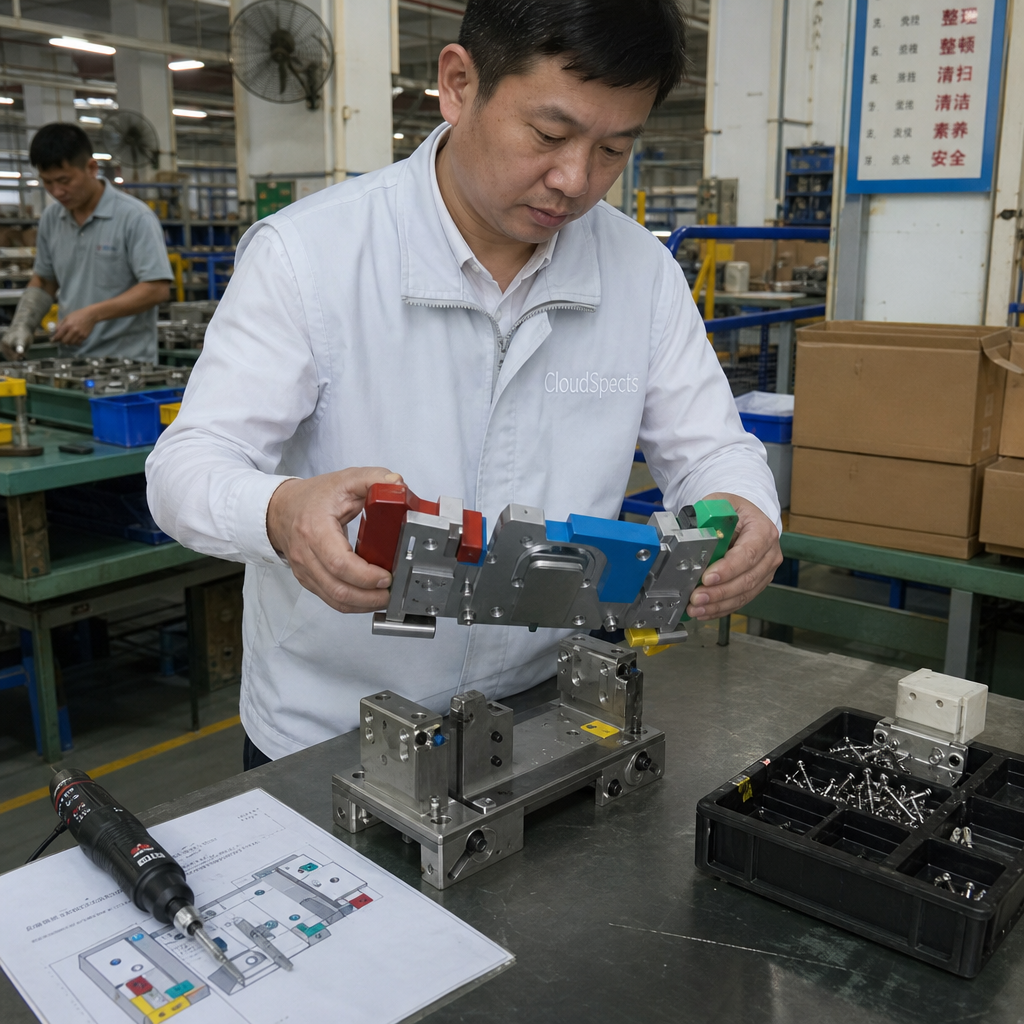
🙅 The Laminated Sign Nobody Reads
Walk into almost any factory in Guangdong or Zhejiang and you will find one: a sheet of A4 taped above a workstation. DO NOT FORGET THE GROMMET. It has been there two years. The defect it warns about still turns up roughly once in a thousand units, and when it does, it turns up on your container, not theirs. The alternative has a name - poka-yoke, Japanese for mistake-proofing - and the idea is simple: stop trying to make people careful, and make the wrong thing physically impossible instead. When our inspectors walk a line for a buyer, one of the first questions we ask is whether last month's fix was a sign or a shape. The wider scope of those checks lives on our China pre-shipment inspection service page. 🔎
📉 Care Is the First Thing a Rush Order Eats
Care is renewable in a quiet month and scarce in a busy one. A line running 900 units a shift in early October runs 1,400 in the week before a ship date, with a night crew, a temporary worker at the bench and one supervisor over three stations. Nothing in the design changed - only the attention. A sign asks for attention; a poka-yoke removes the need for it.
🔧 What Actually Causes the Miss, and What Fixes It
| What goes wrong | What a sign does | What a poka-yoke does |
|---|---|---|
| Two near-identical parts share one bin | "Check the colour before fitting" | Bin divider sized so only one part fits at a time |
| Left and right bracket swapped | "Left goes on the left" | Locating pin offset 8 mm - the wrong bracket will not seat |
| Missing grommet or screw | "Count the kit" | Kit tray with one cavity per part; an empty cavity is visible at pack-out |
| Wrong FNSKU label on the carton | "Check the label" | Label printer holds one artwork file, keyed to the PO number |
| Assembly fitted upside down | "Watch the orientation" | Asymmetric boss - the housing will not close if it is flipped |
| Screw run down under torque | "Tighten it properly" | Torque driver that will not release below the set value |
Six rows, six physical changes - most cost less than a single freight claim.
🧰 Six Patterns You Can Ask a Factory For
You do not need the Japanese vocabulary to brief a toolmaker. These six patterns travel well across categories:
1. Asymmetry. Make the part fit one way only - offset the pin, shift a screw hole, break the symmetry of a moulded boss. The cheapest poka-yoke there is, because it is a number rather than a mechanism.
2. Go / no-go gauges. A block that passes a good part and refuses a bad one. We can measure it and run units through it; a caliper in a drawer cannot claim that.
3. Interlocks. The machine will not cycle unless the jig or tray is in place - and its counter then becomes a record you can read.
4. Fixed-value tooling. Torque drivers with a set release, presses with a hard stop, sealers locked to one temperature band. The setting is the control, and settings photograph well.
5. Count-out trays. One cavity per part; a full tray at the end of the station equals a complete unit. The strongest single fix for missing-accessory complaints.
6. Colour by bin, not by eye. Coding works when it belongs to the container - a red bin for the 12 mm screw, a blue one for the 16 mm - not when it belongs to the 4 pm light in the room.
🔍 What an Inspector Can Verify, and What We Cannot
Let us be blunt about that boundary.
What we can verify on site: that the fixture exists; that the pin offset measures what the drawing says; that a wrong part will not seat; that a kit tray has the right cavities; that the torque driver shows the set value; that the label artwork matches the PO; that twenty units off the line pass the gauge - each with a number and a photo in the report.
What we cannot do: stand at that station for six weeks and confirm the jig was used on every unit, or turn a one-day sample into a process capability study, or convert it into a guarantee about the next batch. A poka-yoke shrinks the opportunity for error; it does not move the risk onto your inspector.
💸 The Arithmetic of One Swapped Bracket
A buyer ordered 2,600 stainless steel shower caddies at FOB $9.40 - about $24,440 on the water. Each caddy hangs on a left/right specific two-piece bracket, and the factory's fix for an earlier mix-up was, predictably, a sign. 🧾
On a 125-piece sample (AQL 2.5, general level II) our inspector found 11 caddies with swapped brackets. A swapped bracket does not fail a drop test or scratch; it simply hangs 14 mm off, which the buyer's customer sees as a crooked shelf in the review photo. Eleven of 125 is 8.8% - roughly 230 caddies of the order that would not mount straight.
The line stopped for two days: 230 caddies re-bracketed, 40 cartons re-packed, then a re-inspection of 80 units that came back at 1.25% - inside the limit. Two man-days at $169 each, $338, plus the factory's own labour. The road not taken was 230 crooked caddies arriving in FBA with returns, removal fees and one-star photos attached.
What came out of it was not a better sign but an 8 mm offset in the locating pin, added to the tooling in one morning; the wrong bracket now physically will not seat. The same logic decides how much of a problem you find before the deposit becomes a container, and you can model it on the AQL calculator.
📝 Four Lines That Turn a Fix Into a Control
Ask for these in writing before production starts: 1. name the poka-yoke device for each known defect class, with its location ("bracket jig at station 4, 8 mm pin offset"), never "operator training"; 2. no fixture, jig, gauge or label file changes without written notice and your approval - silent tooling edits are how a controlled defect comes back; 3. one assembled unit from each shift, photographed on its fixture, attached to the report; 4. third-party inspection before final payment, with the poka-yoke devices named as checkpoints in the scope.
If your supplier pushes back on the second line, that is information too.
💡 The Sixty-Second Version
A defect that depends on care returns every time the schedule tightens. A defect that is physically impossible stops paying you visits. Specify the shape, not the reminder. CloudSpects has run 2,000+ inspections and reports are typically returned within 24 hours - see pricing from $169 a man-day, or talk to us before your next production run. 🚀
❓ FAQs
What does poka-yoke mean in manufacturing?
Poka-yoke is Japanese for mistake-proofing: a physical change to a fixture, mould, gauge or packaging that makes the wrong action impossible or immediately obvious. It replaces the instruction to be careful with a shape that will not let the error happen.
Is a poka-yoke the same as a checklist?
No. A checklist is procedural - it asks a person to look at the right thing at the right time, and it depends on attention. A poka-yoke is physical - the part will not seat, the machine will not cycle, the empty cavity is visible. Checklists are useful; they are just not a control.
Will a Chinese factory actually accept a mistake-proofing requirement?
Usually, yes, when the request is a number or a device rather than a lecture: an 8 mm pin offset, a kit tray with one cavity per part, a torque driver with a set release. Write it into the PO with the other requirements. A factory that refuses to tell you when it changes a jig is telling you something useful.
Can an inspector verify poka-yoke on a one-day visit?
Yes for existence and function, no for ongoing compliance. We measure the fixture, confirm the offset, try a deliberately wrong part, check the kit tray and the labelling setup, and run units through the gauge. We cannot stand at the station for six weeks afterwards, and nobody should promise that they can.
Does mistake-proofing cost a lot to add?
In most cases it is a fixture and a morning of tooling work, often less than a single freight claim. The expensive version of the same defect is the one that ships: rework at the destination, removal fees, returns and review photos.
Frequently asked questions
What does poka-yoke mean in manufacturing?
Poka-yoke is Japanese for mistake-proofing: a physical change to a fixture, mould, gauge or packaging that makes the wrong action impossible or immediately obvious. It replaces the instruction to be careful with a shape that will not let the error happen.
Is a poka-yoke the same as a checklist?
No. A checklist is procedural - it asks a person to look at the right thing at the right time, and it depends on attention. A poka-yoke is physical - the part will not seat, the machine will not cycle, the empty cavity is visible. Checklists are useful; they are just not a control.
Will a Chinese factory actually accept a mistake-proofing requirement?
Usually, yes, when the request is a number or a device rather than a lecture: an 8 mm pin offset, a kit tray with one cavity per part, a torque driver with a set release. Write it into the PO with the other requirements. A factory that refuses to tell you when it changes a jig is telling you something useful.
Can an inspector verify poka-yoke on a one-day visit?
Yes for existence and function, no for ongoing compliance. We measure the fixture, confirm the offset, try a deliberately wrong part, check the kit tray and the labelling setup, and run units through the gauge. We cannot stand at the station for six weeks afterwards, and nobody should promise that they can.
Does mistake-proofing cost a lot to add?
In most cases it is a fixture and a morning of tooling work, often less than a single freight claim. The expensive version of the same defect is the one that ships: rework at the destination, removal fees, returns and review photos.