The Extra Five Percent Nobody Ordered: Catching Overruns Before They Ship
Every conversation about China quality starts with defects. Almost none start with the opposite problem: your factory made more than you ordered.
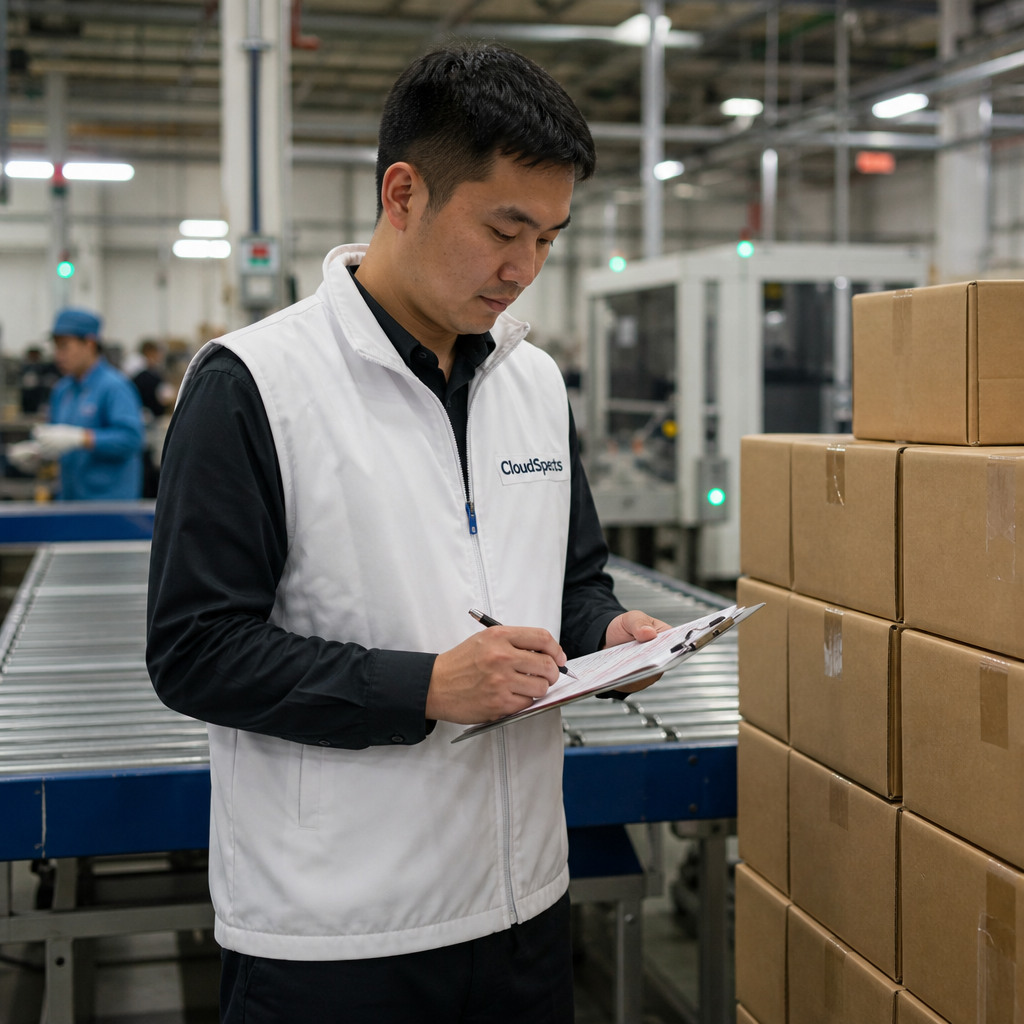
Every conversation about China quality starts with defects. Almost none start with the opposite problem: your factory made more than you ordered. If nobody plans for it, those extra units do not evaporate — they surface months later on a marketplace listing, sometimes still carrying the tooling marks you paid for. The count you can actually police is taken at the end of the line, which is why our pre-shipment inspection treats output count as a measured number rather than a formality.
🎯 Why Factories Make More Than Your PO Says
An overrun usually starts as an insurance policy: the factory expects some units to fail its own final check and builds a buffer, a 3% pad that quietly becomes 5%. Nobody mentions it: the buffer feels like their problem, until the extras leave the building.
Five ordinary reasons sit behind almost every overrun we document:
- Yield padding. The line is set to produce 105% so it can still deliver 100% after its own rejects. Run better than expected and the extra exists.
- Setup waste on moulds and dies. A tool has to warm up and stabilise, and the run is sized to cover that scrap. Fast setup means more survivors.
- Piece-rate incentives. Workers paid per unit keep running while material is loaded. Nobody stops the line at 5:00 pm to land on your exact number.
- Second-quality stock. Units that failed a cosmetic check but still work get set aside "just in case" — your design, in someone else's warehouse.
📦 Where the Extra Units Actually Hide
Overruns hide neither on the line nor in finished goods. They sit in places that are technically still the factory but never appear on the tour:
| Where it hides | What it looks like on site | What it tells you |
|---|---|---|
| Behind the line | Half-filled cartons, no shipping mark, no FNSKU | Planned extras held back "until we know the reject rate" |
| The second-quality pile | Units with fresh tape, touch-up paint or swapped panels | Rework stock that appears in no count at all |
| Sub-supplier lines | A partner unit running the same tooling on days you never heard about | Your design in a building your PO never named |
| The sample room | A shelf of sellable finals, often a dozen or more | Units that leave with visitors instead of with your container |
None of those is automatically fraud — most are ordinary responses to scrap. The point is that all of them are countable, and a count is something you can put in a report.
🧪 Six Checks That Turn "We Made Extras" into Evidence
When a client has an obvious reuse risk, six items go into the brief alongside normal sampling:
- PO quantity against the output counter. Read and photograph the production counter at the start and end of the run. The difference is the number the factory recorded itself.
- Final carton count against the packing list. Count sealed, labelled cartons — cartons, not units. Extras are usually unlabelled, which makes them easy to separate.
- Unlabelled or blank-marked units. Any finished unit without a shipping mark, FNSKU or carton is flagged, photographed with the box number in frame.
- Tooling and cavity counters. Cycle counters on the mould, or the print date on inserts, tell you how many times the tool really ran — regardless of what the supervisor says.
- Consumables against unit count. Cartons, inserts, bags and labels consumed should roughly match units produced. A large gap means something else was made.
- The scrap and overrun disposition record. Ask for the written record of what happens to rejects and extras: scrapped, sold locally or held. A factory with no record has no answer to "where did the rest go?"
Each of those is a reading rather than an opinion, which is what makes it usable when you forward the report. Where sampling is in the brief, the sample size comes off the lot size — the AQL calculator maps lot bands to sample sizes so the report and the PO quote the same table.
📊 What a Report Can and Cannot Prove
This is the honest part. An inspection is evidence about a moment in time — not a title search, a brand audit or a police record.
| An inspection can document | An inspection cannot do |
|---|---|
| Units produced and cartons sealed at the time of the visit | Prove what left the building after the inspector drove away |
| Presence of unlabelled final units and second-quality stock | Establish who owns a design as a matter of law |
| Consumables and counters inconsistent with the PO | Trace one unit to one marketplace seller definitively |
| Additional or outsourced lines running the tooling | Stop a factory selling stock you never paid for |
🏷️ Five Lines for the PO
If you change one document this quarter, change the purchase order. Five short lines, written before the deposit, do the work:
- Declared overrun. State the maximum permitted overrun (commonly 0–2%) and that anything above it is at the factory's cost, not yours.
- Disposition of extras. Extras must be marked not-for-sale, destroyed with photographic evidence, or surrendered with the shipment. Pick one and write it.
- No sale of likeness, branded or unbranded. The factory may not sell units of the design to any third party, with or without your logo.
- Line and location declaration. Name the production site and require written notice before any unit is made elsewhere.
- Records on request. Production counters, scrap logs and consumable purchases to be produced during the inspection visit.
Those five lines cost nothing and give a third-party report something to stand on. Our published pricing keeps the visit cost visible, so the decision to look is practical rather than a leap of faith. If you are unsure which visit to book, send a short note about the order and we will say whether a final random inspection is enough.
💸 The Arithmetic of a Silent Overrun
A real order from Guangdong: 4,200 phone accessories, FOB $3.60, total $15,120, small enough for a single man-day. The output counter showed a run of 4,590 units, while the sealed, labelled carton count matched the PO exactly at 4,200. The missing 390 were not in shipping cartons: they sat in two unlabelled stacks behind the line and on a shelf in the sample room, and about 120 had failed cosmetic screening.
The report cost one man-day at $169, delivered typically within 24 hours of the visit. The factory's explanation: the extras were "for warranty replacements". Possibly true — but this buyer had no warranty pipeline, no returns address and no agreement that the factory would hold stock. The 270 sellable copies of the design were simply unaccounted for. The fix took one email and one added PO line.
The counterfactual is cheap to imagine. On the low end, 270 unlabelled units enter a local market and undercut the launch price. On the high end they go through an established marketplace account and take the Buy Box on the search term the client built. Either way the buyer pays twice: once for the units, once for the price erosion. Across 2,000+ inspections a year, counting is almost always cheaper than litigating.
❓ FAQs
Is an overrun always a sign of a dishonest factory?
No. Most overruns are ordinary yield padding for the factory's own rejects, and plenty of factories consider it good practice. The problem is not the extra units but the absence of a written disposition for them.
How much overrun should I allow?
Write a declared maximum into the PO, usually 0% to 2% depending on the process; moulded and printed goods sit at the higher end because of setup scrap. Anything above the declared figure is at the factory's cost, never invoiced to you.
What does an overrun inspection cost?
A normal visit starts at $169 per man-day and the report is typically issued within 24 hours. Most overrun checks ride along inside a standard final random inspection, so the extra work is a short section in the brief rather than a second trip.
Can an inspector prove the factory sold my design?
No, and no honest inspection company will claim to. A visit can document that units existed outside your PO and where they were stored; what happens afterwards is a contract question, not an inspection finding.
Should I book a during-production or final inspection for this?
Final random inspection is the right moment for counting: the run is finished and the shipping cartons are sealed. A during-production visit helps if you want to read the output counter early, while there is still time to correct the run.
Frequently asked questions
Is an overrun always a sign of a dishonest factory?
No. Most overruns are ordinary yield padding for the factory's own rejects, and plenty of factories consider it good practice. The problem is not the extra units but the absence of a written disposition for them.
How much overrun should I allow?
Write a declared maximum into the PO, usually 0% to 2% depending on the process; moulded and printed goods sit at the higher end because of setup scrap. Anything above the declared figure is at the factory's cost, never invoiced to you.
What does an overrun inspection cost?
A normal visit starts at $169 per man-day and the report is typically issued within 24 hours. Most overrun checks ride along inside a standard final random inspection, so the extra work is a short section in the brief rather than a second trip.
Can an inspector prove the factory sold my design?
No, and no honest inspection company will claim to. A visit can document that units existed outside your PO and where they were stored; what happens afterwards is a contract question, not an inspection finding.
Should I book a during-production or final inspection for this?
Final random inspection is the right moment for counting: the run is finished and the shipping cartons are sealed. A during-production visit helps if you want to read the output counter early, while there is still time to correct the run.