Typhoon Season + 40 Days at Sea = Mold: 6 Moisture Checks Before Your Q4 Shipment Leaves China
The September Problem Nobody Puts on the Purchase Order It rains in South China in September. Not politely - typhoon season can drop 200 to 300 mm on Guangdong's port cities in a single storm, shipping schedules slip, and the air your finished cartons sit in stays at 85 to 95 percent humidity for days.
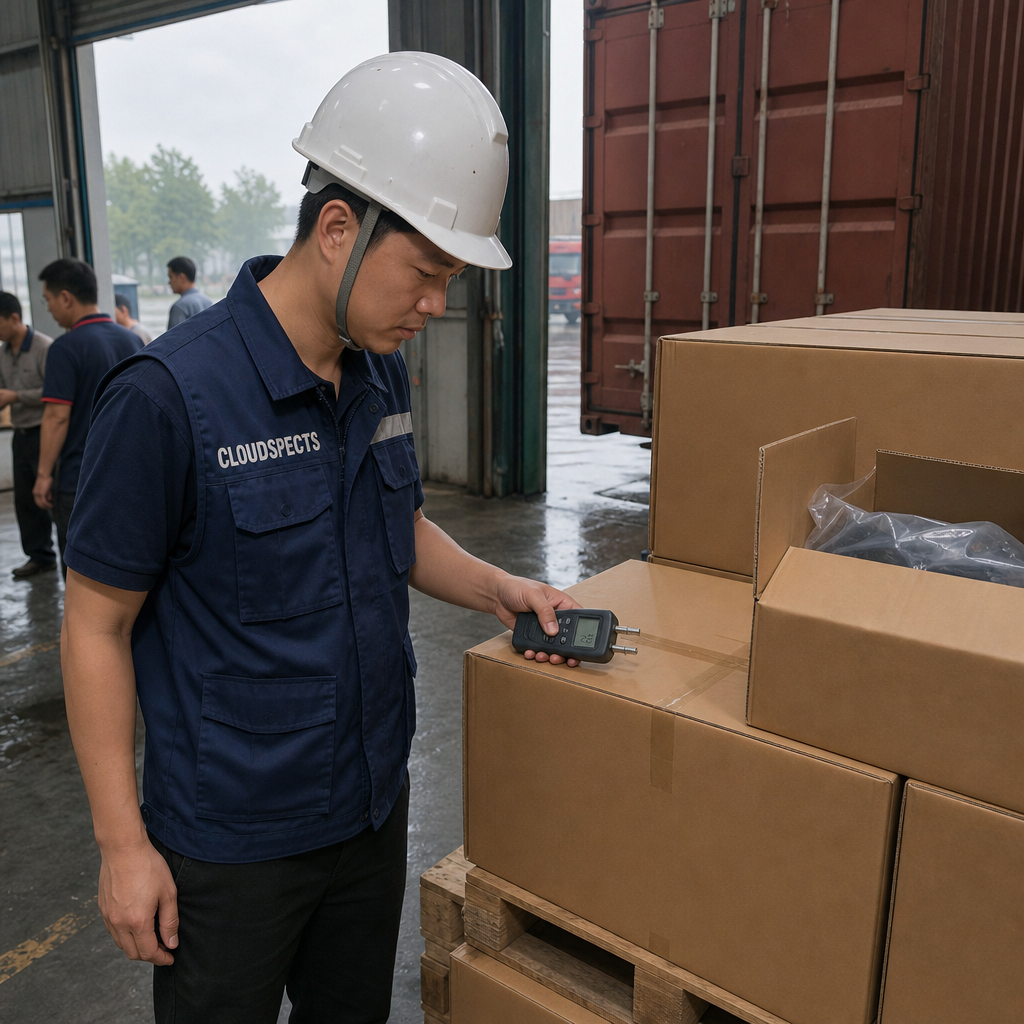
The September Problem Nobody Puts on the Purchase Order
It rains in South China in September. Not politely - typhoon season can drop 200 to 300 mm on Guangdong's port cities in a single storm, shipping schedules slip, and the air your finished cartons sit in stays at 85 to 95 percent humidity for days. Then your goods spend 35 to 45 days crossing the Pacific into colder air. Warm, damp cartons meet cold steel container walls, the box "sweats" from the inside, and mold gets a free ride into your Q4 FBA inventory before a single unit is listed. 🌧️
We have opened containers that smelled like a flooded basement, pulled out pet beds with grey patches blooming through the polybags, and watched a seller's October launch turn into a removal order. In every one of those cases, the mold did not start at sea - it started in a warehouse the week before loading, on a pallet that sat too close to an open dock door.
Here is the uncomfortable part: the fix costs almost nothing, but you have to look before the container door closes. These are the six moisture checks we run on every moisture-sensitive order before it leaves, part of a standard pre-shipment inspection from pre-shipment inspection services.
Where Mold Actually Comes From
It is rarely the factory floor. Floors in Chinese export factories are swept daily and most goods are packed within hours of finishing. The real risk window is storage: finished cartons waiting 3 to 10 days for a sailing date, stacked on concrete, breathing dock air that is damp because it is September. Cardboard is a sponge - it pulls moisture from the air all week, then gives it to everything inside on the voyage.
Sealed polybags make it worse. A polybag that looks protective actually traps humid air against the product. Seal a 25-degree, 90-percent-humidity pocket of air into a bag, drop the temperature to 12 degrees mid-ocean, and you have created a tiny greenhouse for spores that were already on the fabric. 🦠
| Risk point | What happens at sea | When we catch it |
|---|---|---|
| Cartons stored damp | Cardboard softens, mold grows on product surface | Moisture meter at inspection, before loading |
| Polybags sealed over humid air | Condensation inside bag, mildew on textiles | Open-carton check + bag seal audit |
| Pallets on concrete / wet floor | Bottom cartons wick moisture for 40 days | Pallet and floor check at the warehouse |
| Dirty or wet container interior | Floor moisture + odour transfer to cartons | Container condition check before loading |
| No desiccant or vent plan | No drying mechanism for trapped humidity | Packing plan review at inspection |
| Loading in the rain | Cartons wetted between warehouse and container | Loading-day weather + rain cover check |
The Six Moisture Checks We Run Before the Door Closes
| Check | The number we use | Why it matters |
|---|---|---|
| 1. Carton moisture, 40+ cartons across pallets | Under 12% OK; 14%+ = hold | Catches damp storage before it becomes mold |
| 2. Polybag seal & open-carton sniff | Bag fully sealed, no condensation droplets | Trapped humidity is the #1 mold factory |
| 3. Pallet & floor condition | Pallets raised, floor dry, no standing water | Bottom cartons survive the voyage dry |
| 4. Container interior | Dry floor, no holes, no rust, no odour | A clean box is half the battle |
| 5. Desiccant / vent plan | Sized to cargo weight & route | Drying capacity matches the real humidity load |
| 6. Loading-day weather | No rain loading, dock door closed | 30 seconds of rain = 40 days of damp |
Most of these take less than an hour combined and slot into any normal pre-shipment inspection day. If your goods are fabric, foam, paper, wood or leather, ask for them by name. If you want to know exactly how many cartons get checked and why, the AQL calculator shows the sample math in one click.
The Case: 7,200 Pet Beds and a Wet Concrete Floor
A US seller ordered 7,200 polyester pet beds - $38,500 - for a Q4 launch. Production finished September 11, with a September 24 sailing date. The factory had stored 40 percent of the finished cartons on concrete slabs beside an open dock door, and a typhoon had soaked the apron two days earlier.
Our pre-shipment inspection opened 40 cartons across the stack and ran a pin-type moisture meter over each. The average read was 16 percent - four points over our hold line. Three cartons near the floor read 18 to 19 percent, and half the polybags were only loosely folded, not sealed. The inspector put the report ON HOLD and refused to sign the loading sheet.
The supplier moved the stock onto elevated racking, ran dehumidifiers for 48 hours and re-sealed every polybag. The re-inspection read 9 to 11 percent across the board. The container was a new build with a dry floor, so loading went ahead on September 24. The beds arrived in late October and sold through the holidays with zero mold complaints. 💰
The counterfactual came three weeks later from the same factory: another seller's polyester dog blankets loaded without any moisture check. They arrived musty, 210 units were removed at FBA, four one-star reviews landed in two weeks, and the seller paid roughly $9,700 in removal fees, lost sales and rank repair - against a $169 man-day inspection that would have caught the damp cartons in ten minutes.
The Bottom Line
Typhoon season is short, but the damage it does inside a container lasts the whole Q4. Carton moisture, polybag seals, pallets, the container itself and the weather on loading day - six checks, under an hour, and they ride inside a standard inspection starting at $169 per man-day, with the report back typically within ~24h. Across more than 2,000+ inspections, the mold claims we prevent are always cheaper than the ones we photograph. 🌧️✅
Shipping textiles, foam, paper goods or wood this month? Send us your PO before you book the container.
FAQs
Can mold really develop inside a sealed shipping container?
Yes. When warm, humid air from South China meets cold container walls mid-ocean, condensation forms on the steel and drips onto cartons and polybags. If cardboard is damp or a polybag was sealed over humid air, mold can appear within two to three weeks. It is one of the most common hidden causes of musty FBA arrivals in autumn.
What moisture level is too high for cardboard cartons?
We flag cartons above 12 percent moisture content measured with a pin-type meter, and anything above 14 percent is an automatic hold on our side. For context, a dry carton in normal warehouse air usually reads 8 to 11 percent. The check takes seconds per carton and costs nothing extra inside a normal inspection.
Is desiccant enough to protect my goods?
Desiccant helps, but it is not a license to load damp goods. The right sequence is: dry cartons first, sealed polybags second, container floor and walls verified third, then desiccant or vent plugs sized to the route and cargo. We have opened containers where someone threw in two small bags of silica for 20 tonnes of textiles - that is decoration, not protection.
Do I need a special moisture inspection service?
No. Carton moisture, polybag seals, pallet condition, container floor and loading-day weather are all part of a standard pre-shipment inspection - just tell your inspector the goods are moisture-sensitive so the checks are on the checklist. Add the container condition check if the carrier supplied the box.
My goods already arrived musty. What should I do?
Do not put them on sale. Segregate affected cartons, photograph everything including container condition on arrival, and check whether the damage pattern is condensation (center of stack, top cartons) or water ingress (floor level, door end). If an inspection report from before loading shows dry cartons and a clean container, the claim sits with the carrier, not your supplier.
Frequently asked questions
Can mold really develop inside a sealed shipping container?
Yes. When warm, humid air from South China meets cold container walls mid-ocean, condensation forms on the steel and drips onto cartons and polybags. If cardboard is damp or a polybag was sealed over humid air, mold can appear within two to three weeks. It is one of the most common hidden causes of musty FBA arrivals in autumn.
What moisture level is too high for cardboard cartons?
We flag cartons above 12 percent moisture content measured with a pin-type meter, and anything above 14 percent is an automatic hold on our side. For context, a dry carton in normal warehouse air usually reads 8 to 11 percent. The check takes seconds per carton and costs nothing extra inside a normal inspection.
Is desiccant enough to protect my goods?
Desiccant helps, but it is not a license to load damp goods. The right sequence is: dry cartons first, sealed polybags second, container floor and walls verified third, then desiccant or vent plugs sized to the route and cargo. We have opened containers where someone threw in two small bags of silica for 20 tonnes of textiles - that is decoration, not protection.
Do I need a special moisture inspection service?
No. Carton moisture, polybag seals, pallet condition, container floor and loading-day weather are all part of a standard pre-shipment inspection - just tell your inspector the goods are moisture-sensitive so the checks are on the checklist. Add the container condition check if the carrier supplied the box.
My goods already arrived musty. What should I do?
Do not put them on sale. Segregate affected cartons, photograph everything including container condition on arrival, and check whether the damage pattern is condensation (center of stack, top cartons) or water ingress (floor level, door end). If an inspection report from before loading shows dry cartons and a clean container, the claim sits with the carrier, not your supplier.