Your 3PL Sees Your Order Before You Do: 6 Receiving Checks That Catch a Bad Lot
📦 The First Person Who Opens Your Order Does Not Work For You Your container clears customs. A truck backs into a 3PL dock.
📦 The First Person Who Opens Your Order Does Not Work For You
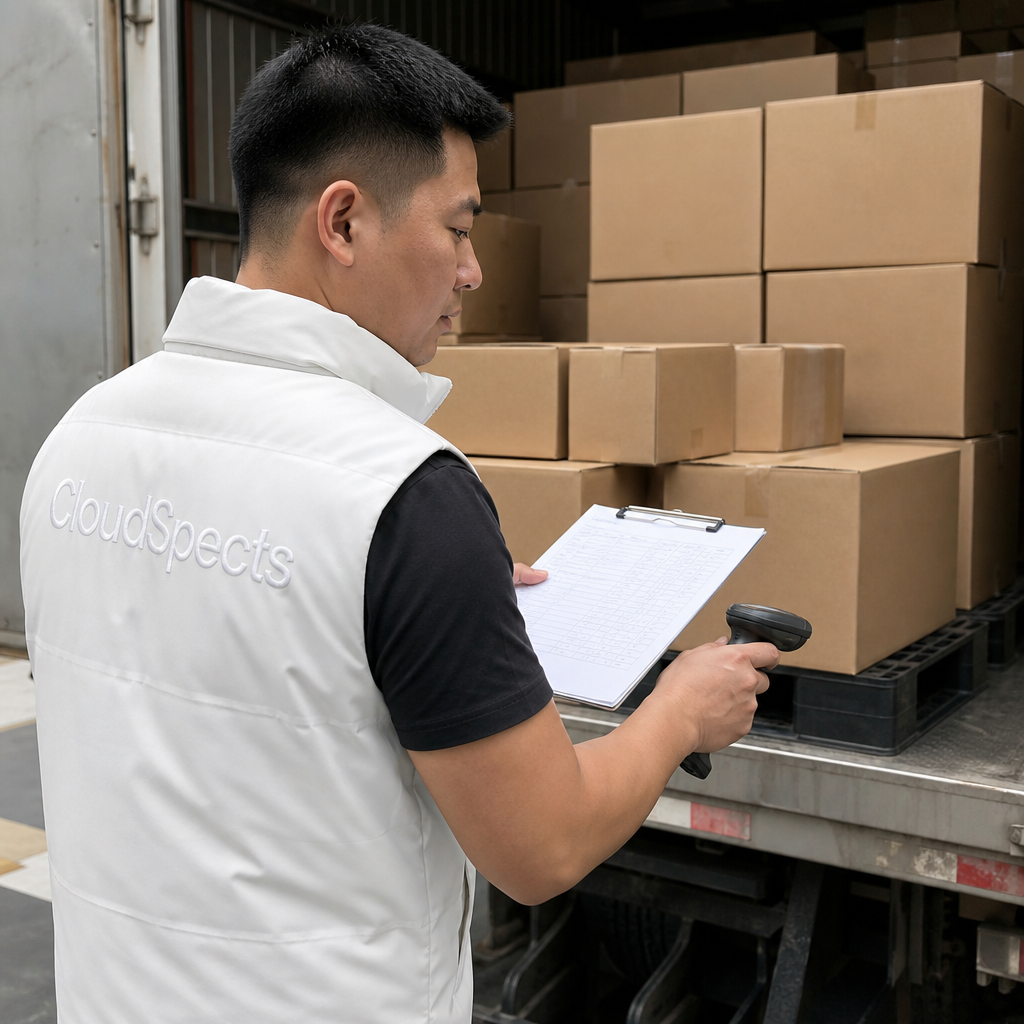
Your container clears customs. A truck backs into a 3PL dock. Someone with a scanner and a shift quota cuts the seal, counts cartons against a receiving document, and puts your goods away. That is the last time anyone looks at your order before a customer does, and the receiving document usually asks one question: how many cartons arrived.
Quality is still decided in China, before the container is loaded, and you can read the full scope of that work on the China pre-shipment inspection page. But receiving is the cheapest place left to catch what slipped through: transit damage, a short count, a carton labelled for the wrong ASIN, a batch quietly swapped after the report was signed. Six checks, written into your receiving instructions, turn a dock hand-off into a real quality gate.
🔎 6 Receiving Checks That Take 20 Minutes
| Check | What the receiver does | What it catches |
|---|---|---|
| 1. Carton count and seal | Counts every carton against the packing list; photographs the container seal and the first two cartons before opening | Shortage, re-packing, a container that was opened in transit |
| 2. Label scan sample | Scans FNSKU and ASIN barcodes on 10 to 20 cartons with the same scanner Amazon uses | Unreadable or wrong labels across a whole carton run |
| 3. Carton condition, graded | Sorts cartons into crush, puncture, moisture and torn, with a count for each tier | Transit damage, condensation, water exposure, bad palletizing |
| 4. Inside three cartons | Opens three to five cartons per pallet and checks polybag seal, unit orientation, accessory bag, odour and moisture | Damp goods, missing accessories, upside-down units, packaging Amazon will flag |
| 5. First 30 seconds | Pulls five to ten units, powers one on, assembles one, counts the hardware in the bag | Dead-on-arrival units, wrong hardware pack, assembly that does not fit |
| 6. Photograph and quarantine | Six photos with the carton number in frame, then holds the lot in a marked area | Lost evidence, and suspect units mixed onto the same shelf as good ones |
🧾 Write It as a Receiving Instruction, Not a Wish
A warehouse follows a document, not a phone call. Give them one page: the carton count to expect, the label sample size, the four damage tiers with photo examples, how many cartons to open per pallet, how many units to test, the quarantine location, and who to notify within the same shift. Ask for the photo set and the tier counts before the lot is put away.
Most warehouses will do this as a paid service, billed hourly or per carton, and it is one of the few line items in a landed cost that pays for itself. A crushed carton found on the dock costs you nothing. The same carton found by a customer costs a refund, a return label, handling, a removal order or a disposal fee, and a review you cannot delete.
🚚 What Receiving Can Never Prove
| Receiving catches | Receiving cannot catch |
|---|---|
| Short counts, wrong labels, visible transit damage, damp cartons, missing accessories, dead-on-arrival units | Material downgrades, thin wall thickness, a bearing that fails in week three, dimensional drift from the approved sample, a sealed retail box holding the wrong colour, wiring that passes a ten-second test and fails under load |
Receiving is a regression net, not the primary gate. The order that needs it most is the one where nobody inspected the production run, and by then the only tool left is damage control.
📊 Case: 2,900 Units and the Pallet Nobody Opened
A seller moved 2,900 collapsible storage bins, FOB $9.80 per unit, a $28,420 order retailing at $26.99. Receiving counted 290 cartons, found every one of them, and put the lot away. Three weeks later 94 units came back with cracked hinge pins: 3.2% of the order. At retail that is about $2,540 in refunds, plus return handling at roughly $1.80 per unit, plus two removal orders for units already sitting in a fulfilment centre. The hinges were fine at the factory. The pallet at the bottom of the container had taken the stacking load.
On the next lot the same seller added a receiving instruction: damage tiers, twelve cartons opened per pallet, ten units assembled. The check took 40 minutes and caught 61 units with hairline cracks in the top-layer cartons. The photo set went to the supplier with the container seal photo, and the supplier credited $598 and air-shipped 66 replacement units. Total cost of the catch was about $90 of warehouse time.
That is the whole argument. We inspect 2,000+ lots a year out of Chinese factories, with reports back typically within 24 hours, and the lots that still go wrong on the water are the ones where nobody wrote down what happens on arrival.
✅ The Order of Operations Nobody Skips Twice
Prevent at the factory, verify at the dock. That means a documented inspection before the container is sealed, at $169 per man-day, with sampling, functional tests, packaging and label checks written into a report you can forward straight to the supplier, and a receiving instruction that turns the last five minutes of a dock worker's day into your final net.
If you want the two ends joined up, send us the product and the packing list. We will tell you what to check on arrival, what to write into the PO, and what a sample of 125 units actually tells you about a 3,200-unit order. The AQL calculator is a good place to start, the full scope sits on our inspection services page, day rates are on pricing, and CloudSpects coordinators answer through contact.
❓ The Questions Buyers Ask Before They Book
Can my 3PL do an inbound inspection for me?
Most third-party warehouses offer it as a paid service, billed hourly or per carton. What matters is the written instruction: carton count, damage tiers, label scan sample, how many cartons to open, how many units to test, the photo set and a quarantine area. Ask for the counts and photos before the lot is put away.
What if the warehouse marks the shipment received in full without checking?
Then you have a count, not an inspection. A generic received note is not evidence you can claim on later. Ask for the receiving document with carton counts, seal photos and damage tiers attached before the lot is placed, and keep the packaging of any damaged carton until the claim is closed.
Is receiving inspection a substitute for pre-shipment inspection?
No. Receiving sees the outside of a carton and a handful of units. It cannot see material grade, wall thickness, wiring under load, or whether the batch inspected is the batch loaded. It is a regression net for transit damage and counting, and it works best as the last step after a proper inspection in China.
How long do I have to file a claim after receiving?
The window comes from your contract, not from a rule of thumb: your forwarder's terms, your cargo insurance and your supplier agreement each set one. What you control is the evidence. Photograph the seal, grade the damage, keep the cartons, and send written notice with a timestamp inside the window.
What does a receiving check cost compared with an inspection in China?
Warehouse time is usually billed hourly or per carton, and a 20-minute check on a normal pallet runs a few dollars. An inspection in China runs from $169 per man-day with a report typically within 24 hours. They are not alternatives: one prevents the defect, the other catches the transit damage.
Frequently asked questions
Can my 3PL do an inbound inspection for me?
Most third-party warehouses offer it as a paid service, billed hourly or per carton. What matters is the written instruction: carton count, damage tiers, label scan sample, how many cartons to open, how many units to test, the photo set and a quarantine area. Ask for the counts and photos before the lot is put away.
What if the warehouse marks the shipment received in full without checking?
Then you have a count, not an inspection. A generic received note is not evidence you can claim on later. Ask for the receiving document with carton counts, seal photos and damage tiers attached before the lot is placed, and keep the packaging of any damaged carton until the claim is closed.
Is receiving inspection a substitute for pre-shipment inspection?
No. Receiving sees the outside of a carton and a handful of units. It cannot see material grade, wall thickness, wiring under load, or whether the batch inspected is the batch loaded. It is a regression net for transit damage and counting, and it works best as the last step after a proper inspection in China.
How long do I have to file a claim after receiving?
The window comes from your contract, not from a rule of thumb: your forwarder's terms, your cargo insurance and your supplier agreement each set one. What you control is the evidence. Photograph the seal, grade the damage, keep the cartons, and send written notice with a timestamp inside the window.
What does a receiving check cost compared with an inspection in China?
Warehouse time is usually billed hourly or per carton, and a 20-minute check on a normal pallet runs a few dollars. An inspection in China runs from $169 per man-day with a report typically within 24 hours. They are not alternatives: one prevents the defect, the other catches the transit damage.