Your Wooden Crate Can Stop Your Container: ISPM 15 Marks, Heat Treatment & Crating QC
🪵 The Report Said "Pass" — and the Port Still Said "Back on the Boat" A container of flat-pack outdoor furniture leaves Ningbo with a clean report: 125 units checked, cartons intact, hardware bags complete, FNSKU scanned.
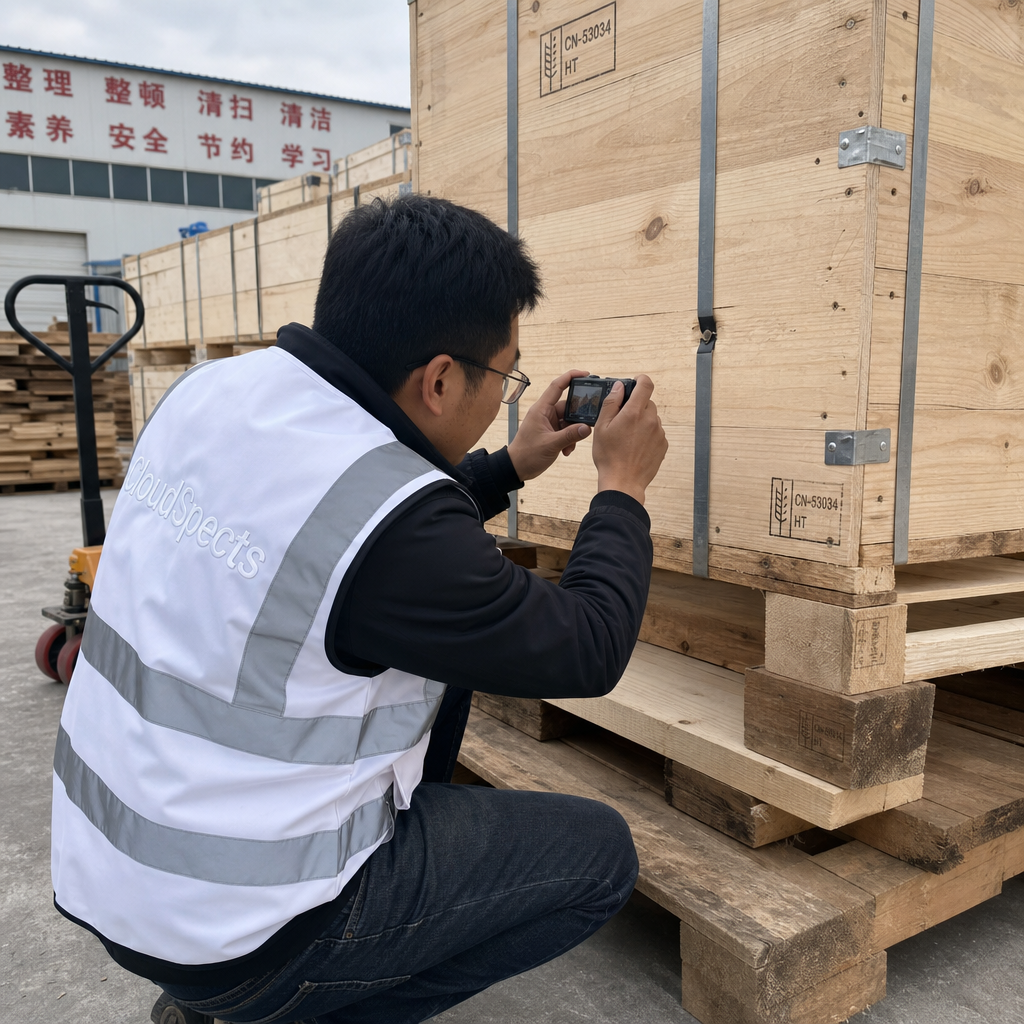
🪵 The Report Said "Pass" — and the Port Still Said "Back on the Boat"
A container of flat-pack outdoor furniture leaves Ningbo with a clean report: 125 units checked, cartons intact, hardware bags complete, FNSKU scanned. Three weeks later the buyer gets one line from the forwarder. Port authorities ordered the wood packaging re-exported. Not the furniture. The crates and the dunnage around it.
We run China pre-shipment inspection for importers every week, and this is the blind spot we hit most often in 2026: teams book a product inspection and never a pack inspection. The product passes. The wood around it fails. 📦
📜 What Counts as Regulated Wood Packaging (It Is Not Just Pallets)
The US rule is specific, and it is broader than most sellers assume. Under 7 CFR 319.40-1, regulated wood packaging material means wood or wood products used in supporting, protecting or carrying a commodity — dunnage, crating, pallets, packing blocks, drums, cases and skids — with two carve-outs people miss: manufactured wood such as plywood, OSB and particleboard, and wood pieces less than 6 mm thick in any dimension, sit outside the definition.
That carve-out is free money. Switching a crate panel to engineered board takes it out of scope, and the same is true for thin slats. What does not work is bracing a load with offcuts from the machine shop. That is dunnage, it is solid wood, and it travels under the same rule as a pallet.
🏷️ The Mark: Four Fields, On Each Article
7 CFR 319.40-3(b)(2) is unusually readable for a regulation. The mark must sit in a visible location on each article — preferably on at least two opposite sides — must be legible and permanent, and must contain four things: the IPPC graphic symbol, the ISO two-letter country code of the country that produced the packaging, a unique producer number assigned by that country's plant protection agency, and a treatment abbreviation — HT for heat treatment or MB for methyl bromide fumigation. The mark certifies a treatment, and the treatment itself has to follow the schedules referenced in 7 CFR part 305.
Then comes the sentence that decides your month: under §319.40-3(b)(3), an inspector at the port of first arrival may order the immediate re-export of regulated wood packaging that arrives without the required mark. Not a fine, and not always a re-treatment. A boat ride home.
| Field on the mark | What the rule requires | What we find in the crating yard |
|---|---|---|
| IPPC graphic symbol | The approved graphic, applied to the wood itself | Stencil smudged past recognition after a month of rain |
| Country code | ISO two-letter code of the producing country (CN) | One crate marked, eleven bare, all from the same crate shop |
| Producer number | Unique number issued to the producer of the packaging | Number belongs to the fumigation plant, not the crate maker who built it |
| Treatment code | HT or MB, matching the treatment actually performed | MB fumigation, on a lane whose destination no longer accepts it |
🔍 Eight Crating Checks Before the Container Doors Close
| # | Check | How we test it in the yard | What a fail looks like |
|---|---|---|---|
| 1 | Count marks against solid-wood articles | Count crates, pallets, runners and loose blocking, then count marks | Marks on the crates only; blocking and dunnage bare |
| 2 | Read all four fields | Photograph each mark, zoom until symbol, code, producer number and HT/MB are legible | A mark that photographs as a grey rectangle |
| 3 | Permanence | Confirm the mark is on the wood — printed or stamped — not a paper sticker | Adhesive label that falls off in a damp container |
| 4 | Treatment against destination | Match the HT/MB code with the destination's accepted treatments | MB on a lane that stopped accepting it |
| 5 | Producer number and paperwork | Cross-check the number on the wood against the treatment record: same producer, same batch, dated before loading | Certificate for a different batch, issued after the crates were built |
| 6 | Bark, pests, soil | Hand-check new crates for bark strips, live insects, mould and wet patches | Bark edges on fresh crates — the fastest route to a secondary inspection |
| 7 | Crate build for the load | Panel gauge, nail or screw count, corner bracing, runner spacing; check wood moisture on green stock | 12 mm panel where 18 mm was specified; green wood shrinking loose in transit |
| 8 | Documentation pack | Photographs of every mark, the treatment record, crate count against the packing list | Everything verbal, nothing on paper, nothing to hand a port inspector |
💸 The Arithmetic of One Unmarked Crate
A 2026 case from our own files: 3,800 solid-wood outdoor side tables, FOB $14.60, shipped in 96 crates with loose dunnage. The product inspection passed. The crating check we added at the loading bay found 22 crates with no mark at all — a new crate maker had split the job between two shops and only one of them owned a stamp — 17 crates whose mark was a paper label glued to the panel, 9 whose producer number pointed at the fumigation plant while the treatment record named a different batch, and 4 with bark edges still attached. Panel gauge on the base runners was 12 mm against an 18 mm spec, with six nails where the drawing called for ten.
Re-stamping and re-treating 22 crates, upgrading the runners and re-packing four pallets took three days plus one man-day of inspection time. Compare that with the alternative: re-export, re-load and a Q4 shelf that stays empty while the stock sails in the wrong direction. $169 of man-day time against five figures of freight is not a close call. 🧮
❓ FAQs
What is the ISPM 15 mark and who actually checks it?
It is the phytosanitary mark on solid-wood packaging. Under the US rule the mark must carry the IPPC graphic symbol, the ISO two-letter code of the country that produced the packaging, a producer number issued by that country's plant protection agency, and the treatment abbreviation HT or MB. A port inspector checks it, long after the factory gate.
Are plywood crates and OSB pallets exempt?
Under 7 CFR 319.40-1, manufactured wood materials such as plywood, OSB and particleboard fall outside the definition of regulated wood packaging material, and so do wood pieces less than 6 mm thick in any dimension. Solid-wood crates, pallets, cases, skids, packing blocks and dunnage stay inside it.
What happens if the mark is missing?
7 CFR 319.40-3(b)(3) lets an inspector at the port of first arrival order the immediate re-export of regulated wood packaging that arrives without the required mark, in addition to or instead of the usual port procedures. Re-treatment at destination is possible, but the freight math rarely favours it.
Does loose dunnage need the mark as well?
Yes. The rule covers wood packaging material used with cargo, and it names dunnage, packing blocks and skids. The mark belongs on each article, preferably on at least two opposite sides. Offcuts used to brace a load are dunnage.
How long does the crating pass add to an inspection?
Usually 30 to 45 minutes on a lot with 80 to 150 solid-wood articles: counting articles, photographing every mark, reading the four fields and pulling the treatment record. It fits into the same loading-bay visit as the product checks rather than a second trip.
🚢 Five Lines to Add to the Crating Spec
One: every solid-wood article carries a legible mark — crates, pallets, runners, blocking, dunnage. Two: the producer number on the wood matches the producer named on the treatment record. Three: treatment method stated in advance and matched to the destination. Four: crate drawings with panel gauge, runner spacing and fastener counts, plus debarked stock. Five: a photo pack of every mark uploaded with the loading photos, not promised later.
The mark on a crate is a 20-second check and a three-week problem. Our inspectors photograph every mark on every solid-wood article, run the counts against the packing list, and put the evidence into the same report you get for the product — typically within ~24 hours, from a team that has completed 2,000+ inspections. Unusual crate drawings or a new destination go through the contact page first. When you book your next pre-shipment inspection, ask for the crating pass in the same visit, and widen the unit checks with the AQL calculator before the visit.
Frequently asked questions
What is the ISPM 15 mark and who actually checks it?
It is the phytosanitary mark on solid-wood packaging. Under the US rule the mark must carry the IPPC graphic symbol, the ISO two-letter code of the country that produced the packaging, a producer number issued by that country's plant protection agency, and the treatment abbreviation HT or MB. A port inspector checks it, long after the factory gate.
Are plywood crates and OSB pallets exempt?
Under 7 CFR 319.40-1, manufactured wood materials such as plywood, OSB and particleboard fall outside the definition of regulated wood packaging material, and so do wood pieces less than 6 mm thick in any dimension. Solid-wood crates, pallets, cases, skids, packing blocks and dunnage stay inside it.
What happens if the mark is missing?
7 CFR 319.40-3(b)(3) lets an inspector at the port of first arrival order the immediate re-export of regulated wood packaging that arrives without the required mark, in addition to or instead of the usual port procedures. Re-treatment at destination is possible, but the freight math rarely favours it.
Does loose dunnage need the mark as well?
Yes. The rule covers wood packaging material used with cargo, and it names dunnage, packing blocks and skids. The mark belongs on each article, preferably on at least two opposite sides. Offcuts used to brace a load are dunnage.
How long does the crating pass add to an inspection?
Usually 30 to 45 minutes on a lot with 80 to 150 solid-wood articles: counting articles, photographing every mark, reading the four fields and pulling the treatment record. It fits into the same loading-bay visit as the product checks rather than a second trip.