The Drawing You Approved Is Not the One on the Line: Revision Control for China Orders
🧭 A four-millimetre hole, and a container that never sold A buyer we work with approved revision C of a folding shelf bracket in February.
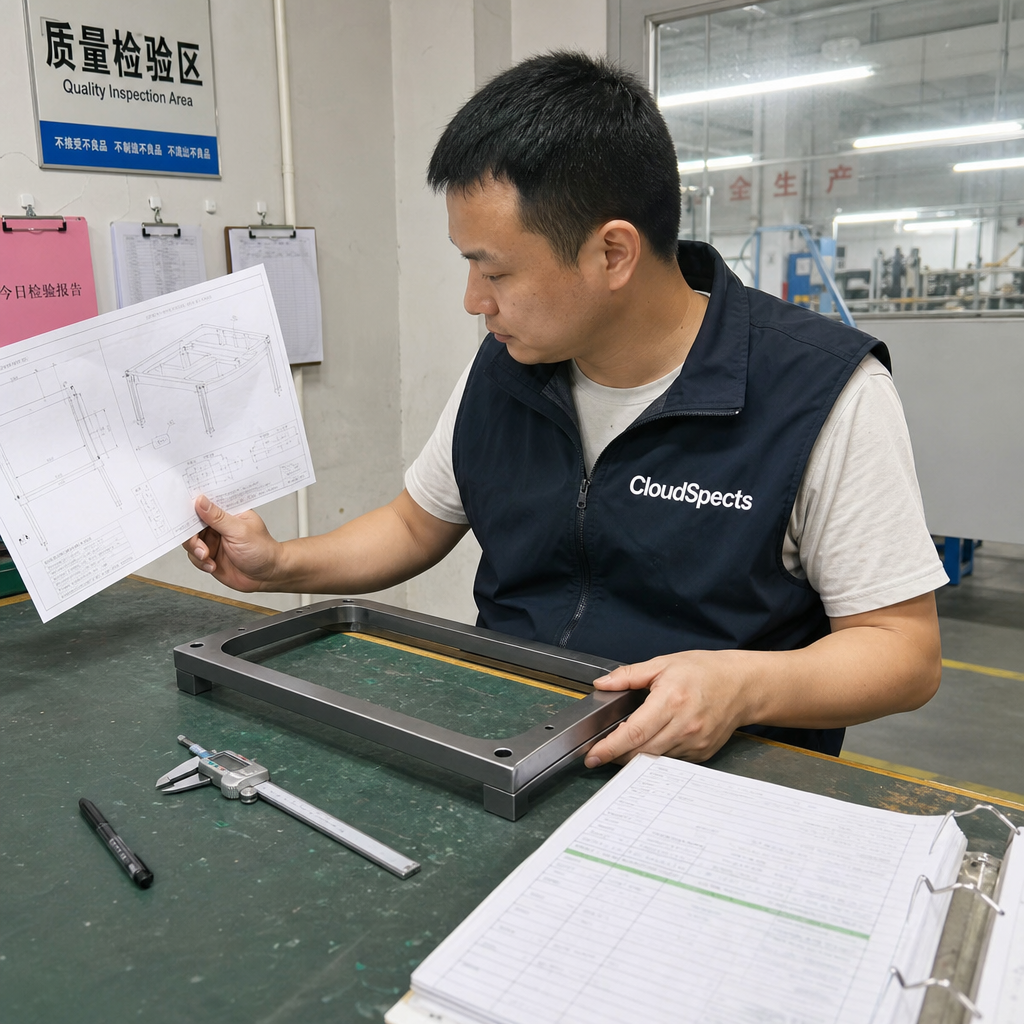
🧭 A four-millimetre hole, and a container that never sold
A buyer we work with approved revision C of a folding shelf bracket in February. Rev C moved the mounting hole four millimetres outboard so the shelf would clear a wall stud. On the floor, the tooling room was still running the Rev A fixture from January, because nobody had walked the new drawing down to the jig. Every unit fit the factory's own test stand perfectly. None fit the buyer's wall. Revision control sounds like paperwork for engineers; what it really controls is whether the container you are paying for holds product or scrap. If your orders run through Amazon FBA inspection China, the person on the floor with the clipboard is often the last human who will ever compare the line against the revision you actually signed. ⚠️
This has nothing to do with how good the factory is. It is a communication-system failure, and it is predictable. Across 2,000+ inspections a year, the revision-drift cases we catch are rarely dramatic: one slot on a mould that was never re-cut, one hole pattern still four millimetres off, one label printed from last year's file. The product works well enough that nobody complains at the trade-show stage, and then it fails at the customer's wall. 🧭
📊 Five ways a revision dies between the inbox and the line
Almost always, the drift comes down to one of five paths.
One: the file never left your inbox. The drawing was sent; the planning office printed and filed it, because the order sheet still named the old file.
Two: the tooling room was never told. Production got the update; the people who cut, bend or weld the fixture did not. This is the most common cause of drift we see.
Three: the old revision was cheaper. Rev C added two gussets; the factory quietly built Rev B, which passed a visual check and used less material. That is silent cost-down, and it deserves the same written treatment as any change.
Four: two revisions ran side by side. New tooling started mid-batch, so early cartons are Rev C and later cartons are Rev B. Unless somebody maps carton numbers to revisions, nobody can sort good from bad after the fact.
Five: the revision number never moved. The drawing was edited and re-sent as "Rev C" with different content, so two files answer to one name and every conversation about the current drawing is ambiguous.
📊 The signals that a batch is built to the wrong revision
Together these are the fingerprint of a revision problem, and exactly what an inspector should record with the revision letter in frame.
| Signal on the floor | What it usually means | What to check next |
|---|---|---|
| Dimensional drift that matches an older drawing | An old fixture still in service | Ask for the fixture cut date and rev tag |
| Cartons inside one lot measure differently | A mid-batch tooling change | Map carton numbers to dates and revisions |
| Part is "close enough" but misses a stamped detail | Superseded component pulled from old stock | Count and segregate the affected cartons |
| Factory says "we always make it this way" | They are building the drawing they were trained on | Walk the current drawing to the line with them |
| Printed packaging shows the old model code | Print files were never re-released | Compare box print against current artwork |
🧪 Six checks that catch a superseded drawing
This is the part you can hand to a supplier tomorrow morning. None of it is exotic, and all of it fits inside a normal man-day.
One: pin the revision before you look at the goods. Open the visit with one written question, which revision is this batch built to, and get the answer with the letter and the date. If it disagrees with your own file, you have found the problem before opening a box. ✅
Two: compare the part against the drawing, not against a sample. A sample of last month's batch tells you what they made last time. The drawing tells you what they were supposed to make this time. Pull three dimensions straight off the sheet and measure them. We size the sample with the AQL calculator, because a four-millimetre drift shows up in a handful of measurements long before it shows up in a visual sweep.
Three: interrogate the fixture and the mould. Every fixture should carry a tag with the revision and cut date. If the tag says Rev A and the order says Rev C, stop, photograph both and call the tooling room.
Four: read the date codes, not just the labels. If the cartons span two production windows, treat each window as its own batch and measure each one. A single lot can contain two revisions that were never meant to ship together. 🔧
Five: cross-check the printed materials. Box, insert and manual all carry model codes, and a revision change almost always drags one out of date. Printed material is cheapest to fix before a run and most painful after one.
Six: photograph the evidence with the revision letter in frame. A photo of a mismatch is worth nothing six weeks later unless the viewer can tie it to a revision. Put the drawing corner and the measured part into one shot.
💸 What a revision slip costs, in one real case
A client approved a new revision of a steel display rack to fix a wobble. The tooling room kept building the old stand. Our inspector caught it not with a dramatic defect but with a tape measure: the mounting hole sat four millimetres from where the drawing said it belonged. The order was worth $27,600 FOB and the affected cartons were already banded for a container. Because the drift was caught at pre-shipment, the fix was a re-drill of 340 units and one new fixture, two man-days of delay instead of a full re-export. The alternative: 2,400 non-fitting racks reaching a US warehouse, a return rate in the high single digits, removal fees and a rating that sags for a reason nobody can name. Our rate is $169 per man-day and the written report lands typically within 24 hours, which makes a half-day revision check the cheapest insurance in the chain. 💸
📝 The four lines that stop revision drift in your next order
You do not need an engineering department. You need four lines in the purchase order.
1. Build to [revision letter], dated [date]. No other revision is authorised. Name the file, not just the letter.
2. Any change to drawing, material or component requires written approval before production. This is what converts a silent cost-down into a conversation.
3. Every carton to carry a production date code. Without it, a mid-batch revision change is unsortable after the fact.
4. Final payment tied to a third-party report confirming the approved revision. Keep our contact page nearby when you want a visit scoped, and treat the pricing page as a budget line.
Revision control is boring, which is exactly why it works. The factories that get it right are not more honest than the rest. They have simply made it a habit. 📝
❓ FAQs
Whose job is revision control, mine or the factory's?
Both, but the burden of proof sits with you. Assume the factory has no change-control process until you have seen it. A named revision on the purchase order plus a date code on every carton gives you the trail to prove which revision shipped.
Can an inspector really catch a wrong revision in one visit?
Often yes, because the giveaway is usually dimensional and shows up in the first few measured units. What an inspector cannot do is measure against a drawing nobody sent, so send the current revision with the booking.
What if the factory says the old revision is functionally identical?
Then it should cost them nothing to build the revision you approved. Functionally identical is a claim, not evidence. Ask for the drawing comparison and a measured first article against the approved sheet.
How should I handle a mid-batch tooling change?
Split the lot. Treat each production window as its own batch with its own sample and report, so you can release the good cartons and hold the rest instead of gambling on the container.
Does any of this matter on a small order?
It matters more, not less. A small order has less volume to absorb a mistake and the fix costs proportionally more. The four purchase-order lines cost nothing to add.
Frequently asked questions
Whose job is revision control, mine or the factory's?
Both, but the burden of proof sits with you. Assume the factory has no change-control process until you have seen it. A named revision on the purchase order plus a date code on every carton gives you the trail to prove which revision shipped.
Can an inspector really catch a wrong revision in one visit?
Often yes, because the giveaway is usually dimensional and shows up in the first few measured units. What an inspector cannot do is measure against a drawing nobody sent, so send the current revision with the booking.
What if the factory says the old revision is functionally identical?
Then it should cost them nothing to build the revision you approved. Functionally identical is a claim, not evidence. Ask for the drawing comparison and a measured first article against the approved sheet.
How should I handle a mid-batch tooling change?
Split the lot. Treat each production window as its own batch with its own sample and report, so you can release the good cartons and hold the rest instead of gambling on the container.
Does any of this matter on a small order?
It matters more, not less. A small order has less volume to absorb a mistake and the fix costs proportionally more. The four purchase-order lines cost nothing to add.