The Last Ten Percent: Why Defects Cluster at the End of a Production Run
A factory can run the first four thousand units clean and still hand you four hundred bad ones before the order closes. Nothing changed on the drawing.
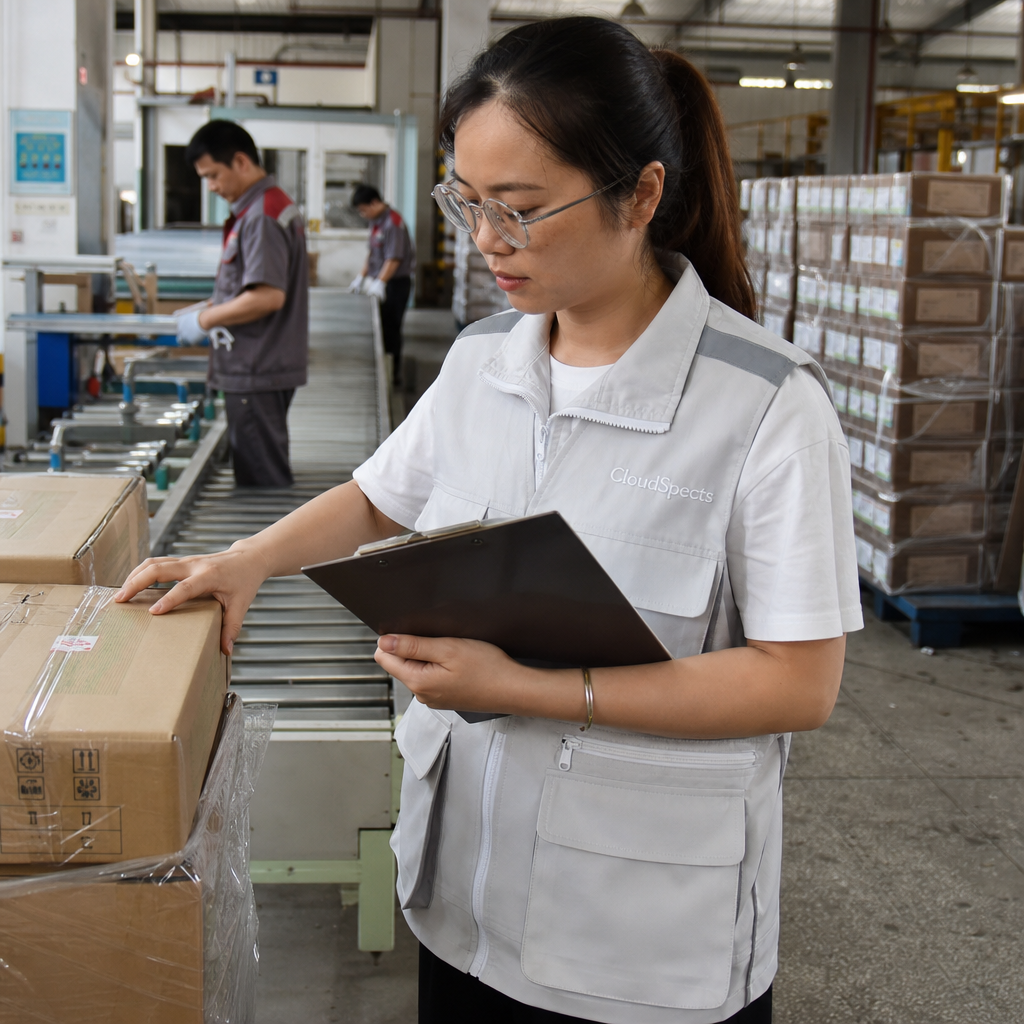
A factory can run the first four thousand units clean and still hand you four hundred bad ones before the order closes. Nothing changed on the drawing. What changed is where those units sat in time, and the tail of a run is where quality quietly stops being anyone's priority. It is why we ask for the production calendar, not only the finished pallets, on an Amazon FBA inspection in China.
🔚 The tail is not the same product as the head
Open a container and you are looking at one purchase order. The factory built it as two different jobs: the confident beginning, when the line is being watched, and the rushed end, when it is not.
Buyers rarely see that split because it never appears on the paperwork. It appears in date codes, in the order of the pallets, and in a measurement taken from two units that were made eight days apart.
🧠 Six things that change in the final stretch
None of these is sabotage. All of them are normal behaviour in a factory that is behind on a promise.
| # | What changes late in the run | What you see on the units |
|---|---|---|
| 1 | Output pressure: the daily number beats the first-article ritual | Assembly steps skipped, fasteners left at minimum torque |
| 2 | The A-crew has moved on, so a night or overtime shift finishes the order | Inconsistent finishing, hand-polish marks, careless packing |
| 3 | Tooling wears after tens of thousands of cycles | Flash, short shots, weld spatter, dimensions drifting outward |
| 4 | The good material lot runs out | A close-enough substitute, lighter parts, a different colour lot |
| 5 | QC attention has already moved to the next PO | Defects that were being pulled out early stop being pulled out |
| 6 | Packing gets improvised to hit the cut-off | Dividers dropped, corner protection missing, cartons taped over gaps |
📅 How a tail shows up in the data
You do not need a laboratory to find it. You need the batch split by when it was made.
Every serious factory stamps something: a date code on the carton, a shift letter, a mould cavity number, a printed week on the polybag. Read those marks across the whole stack rather than the top layer, and the lot usually separates into two or three clusters. Then compare the clusters with each other instead of with a drawing.
When the newest cluster is measurably worse than the oldest, shorter springs, thinner walls, a different gloss, you are not looking at random variation. You are looking at the tail, and a tail is still a decision you can make before the container is sealed.
🔎 Eight checks that catch a tail
| # | Check |
|---|---|
| 1 | Date codes read on every pallet and mapped to shift and production week |
| 2 | Sample pulled from the newest pallets, not the top layer of the oldest |
| 3 | Key dimensions measured on units from the final production day, against the golden sample |
| 4 | Tooling condition on the last units: flash, spatter, release marks, cavity drift |
| 5 | Finish compared between first-batch and last-batch units under the same light |
| 6 | Output counter against carton count against the packing list |
| 7 | Materials used on the final run matched to the approved bill of materials and colour lot |
| 8 | Packing quality on the last cartons: dividers, corner protection, FNSKU labels |
📊 Sampling still sets the floor
An AQL plan decides how many units you look at, not which ones. The second part is the part you control. Set the sample size with our AQL calculator, then insist the units are pulled from across the stack, newest pallets included, instead of from one convenient layer.
📌 The hold point nobody writes
The cheapest control on a tail is a hold point: a named stage in the run where nothing moves forward until a check has been signed. Most purchase orders describe what the product is, and say nothing at all about when anyone looks at it.
Two hold points do most of the work. The first sits at roughly eighty per cent of the run, when the tooling has real hours on it and the crew is tired. It is a short dimensional and cosmetic pass against the golden sample, and it takes an hour. The second sits at packing, and it is about cartons rather than units: dividers, corner protection, labels and count.
Write both into the purchase order with a consequence attached, because a hold point without a payment link is a suggestion. One sentence is enough: the final ten per cent is not packed until the third-party report is issued. A factory plans around that sentence, and a tail stops being a surprise.
| Lot size | AQL 2.5 Level II | Accept / Reject |
|---|---|---|
| 501-1,200 | n=80 | Ac 5 / Re 6 |
| 1,201-3,200 | n=125 | Ac 7 / Re 8 |
| 3,201-10,000 | n=200 | Ac 10 / Re 11 |
💵 What it looked like on a real order
4,200 ceramic plant pots, FOB $8.60, roughly $36,120, from Chaozhou. The first three production days were clean. The final two were not: of a 200-unit sample, 31 pots had rim chips under directional light, 26 measured 4.3 to 4.5 mm at the wall against 5.0 to 5.4 mm on the golden sample, 19 saucers had drifted 2.6 on a colour difference meter, 14 foot rings were left unglazed, and eight cartons shipped without moulded pulp separation. Every one of those units carried a date code from the last two days.
The buyer held 320 units back for re-glazing, the second kiln run was stopped until the mould shift was signed off, and the batch went out five days late. Two man-days, $338. The alternative is a chip rate that lands on whichever customers happen to open a late carton first.
🚧 Where our job stops
CloudSpects inspectors can read date codes, measure the units and photograph the cluster. We cannot make a factory's last day behave like its first, and a visit does not certify a product, because a kiln or a salt-spray claim belongs to a laboratory. Across 2,000+ inspections a year, the reports that save the most money are the ones that name the pallets. Reports are typically returned within 24 hours.
If your finished goods are already boxed, ask which day they were made. Then check pricing (from $169 a man-day) and send us the PO before the container is packed.
❓ FAQs
Why do defects cluster at the end of a production run?
Because the last stretch is where the schedule has already been lost. Overtime shifts, worn tooling, a changed material lot and a crew that has mentally moved to the next order all land in the same week.
Can I just tell the factory to slow down at the end?
You can ask, and you should write it into the purchase order. But an instruction without a check is a hope. The reliable control is a hold point near the end of the run plus a sample drawn from the newest pallets.
How do I tell which pallets came from the last production days?
Read the carton date code, shift letter or cavity mark on every pallet and sort the stack into clusters. On most lots the final week separates cleanly from the rest of the shipment.
Is one inspection enough to catch a tail defect?
One properly sampled visit catches a tail that already exists. If the final week has not been built yet, no sample can see it, and that is a coverage problem rather than an inspector problem.
Do you charge extra for sampling the last pallets?
No. The man-day covers the lot. What changes the time needed is the number of SKUs and pallets, not which pallets we open.
Frequently asked questions
Why do defects cluster at the end of a production run?
Because the last stretch is where the schedule has already been lost. Overtime shifts, worn tooling, a changed material lot and a crew that has mentally moved to the next order all land in the same week.
Can I just tell the factory to slow down at the end?
You can ask, and you should write it into the purchase order. But an instruction without a check is a hope. The reliable control is a hold point near the end of the run plus a sample drawn from the newest pallets.
How do I tell which pallets came from the last production days?
Read the carton date code, shift letter or cavity mark on every pallet and sort the stack into clusters. On most lots the final week separates cleanly from the rest of the shipment.
Is one inspection enough to catch a tail defect?
One properly sampled visit catches a tail that already exists. If the final week has not been built yet, no sample can see it, and that is a coverage problem rather than an inspector problem.
Do you charge extra for sampling the last pallets?
No. The man-day covers the lot. What changes the time needed is the number of SKUs and pallets, not which pallets we open.