What Fits in One Inspection Day: The Coverage Math Behind a China Factory Visit
Every quote for a China factory visit is priced per man-day, and that tidy number hides the only question that matters on the day: what actually fits inside it?
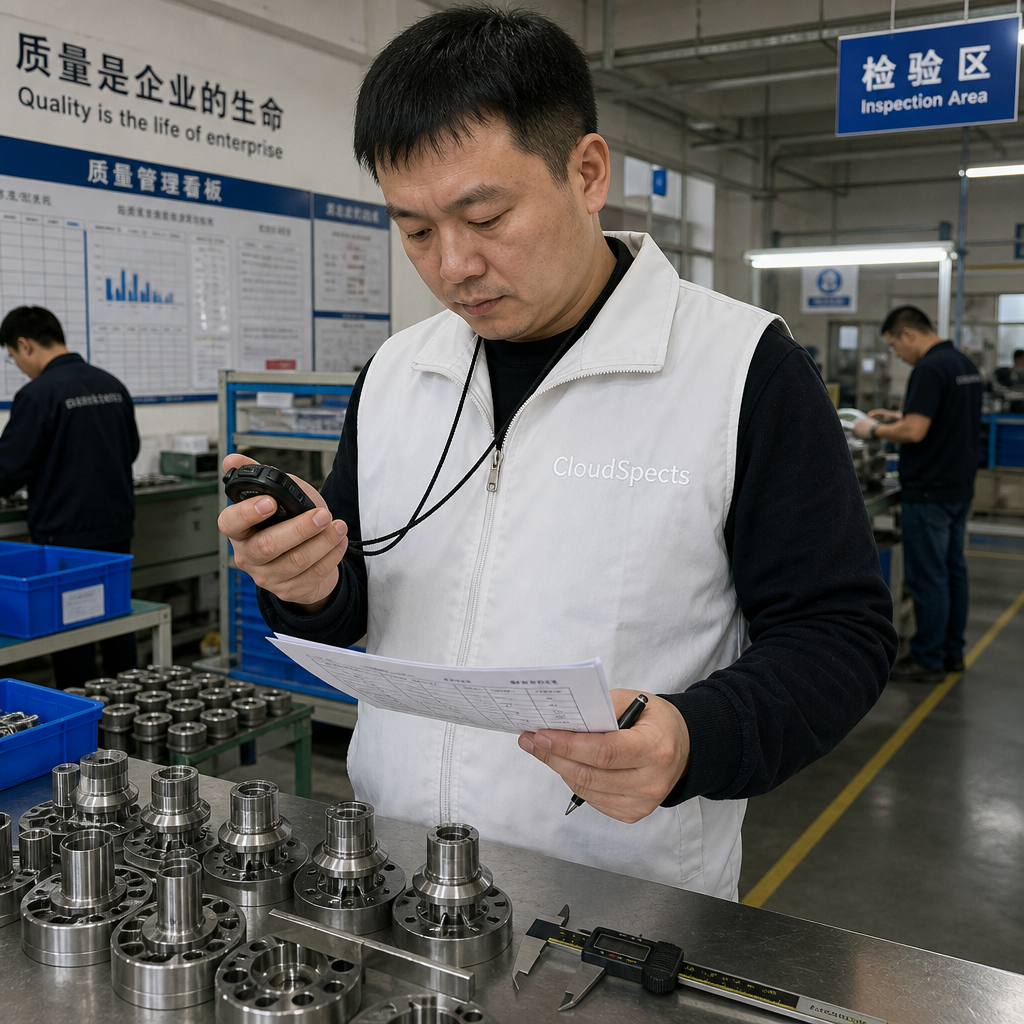
Every quote for a China factory visit is priced per man-day, and that tidy number hides the only question that matters on the day: what actually fits inside it? Across 2,000+ lots a year of Amazon FBA inspection China work, our answer is boringly consistent — one inspector covers one product, one lot and one honest set of tests. Add a fourth thing to the schedule and something quietly falls off the list. This is the coverage arithmetic we walk through before a booking, because a visit that cannot prove anything is worse than no visit at all: it still produces a report, and that report still gets filed as evidence.
🕒 Your eight hours are never eight hours
A day on site is assembled from fixed blocks. Travel and gate paperwork come first, the finished-lot walk comes next, and every unit you sample has to be unpacked and packed again. The table below is the budget our inspectors actually plan against for a single-SKU pre-shipment visit of roughly 200 units.
| Stage of the visit | Typical time | What it protects |
|---|---|---|
| Travel, gate sign-in, PPE, safety talk | 45–75 min | Getting into the building at all |
| Finished-lot walk, date codes, pallet mapping | 20–40 min | Sampling sealed cartons instead of the demonstration line |
| Drawing the sample from cartons and unpacking | 60–120 min | A random sample across pallets, not the top layer |
| Dimensional and material checks | 45–90 min | Thickness, GSM, tube gauge, tolerances against the sealed sample |
| Function tests | 60–240 min | The part that catches real failures rather than cosmetic ones |
| Packaging, carton, FNSKU and accessory count | 45–60 min | What Amazon rejects and what buyers complain about |
| Photo evidence, defect quarantine, repacking | 45–70 min | The document you argue with three weeks later |
| Exit debrief and notes | 20–30 min | A report that can be written the same evening |
Add that column up and a normal visit is fully committed before the last function test finishes. There is no spare afternoon in which to “also take a quick look” at a second SKU, and no honest way to promise one.
📐 Coverage follows unit size, not order size
Sample size comes from the sampling plan and the lot size, not from how nervous the buyer is — pull the ladder for your own quantity from the AQL calculator. A 6,000-unit order of phone cases and a 6,000-unit order of garden benches land in the same band on paper and in completely different worlds on the floor.
| Product type | AQL 2.5 level II sample | Realistic full-function coverage in one day |
|---|---|---|
| Small electronics, 500–3,500 units | n = 80–200 | Yes — 100–200 units through four to six function tests |
| Mid-size homeware, 1,000–5,000 units | n = 125–200 | Yes, but one key test suite only; a second suite eats the day |
| Furniture and bulky items, 200–1,200 units | n = 32–80 | Assembly, stability and finish on 25–40 units, plus carton checks |
| A container carrying six or more SKUs | n per SKU | No — that is six visits wearing one bill of lading |
Look at the last row again. The arithmetic does not punish you for ordering broadly; it punishes you for pretending one visit can be six visits. Split the days and each SKU gets a real sample and a real report, which is the entire point of paying for a third party in the first place.
🧮 The three signs a visit is running out of day
The first is still unpacking cartons at 15:00. The second is a function test that has quietly shrunk to “it switches on”. The third is the carton drop test being skipped because the pallet has already been strapped for loading. None of these are dishonest — they are what happens when the brief asks for a day and a half of work. What makes them expensive is that the report looks the same either way.
The fix is written priority, not longer days. Tell the inspector which two failure modes would stop the shipment, and the reductions happen in the harmless corners: fewer photographs of the good units, a smaller colour comparison set, faster packing.
🎯 The case where a second day was the cheap option
A client booked a single visit for 3,200 collapsible pet crates at FOB $34, an order worth $108,800. The product needed five function checks per unit plus a loaded-stability test, and every crate had to be unfolded and refolded. By 16:30, 61 units had been through the full sequence and the carton drop test had not run; the factory, helpful as ever, offered to “finish the rest tomorrow with their own QC”. The buyer approved the release on that partial set and saved one man-day.
The second booking, at $169, is what actually paid for itself. The follow-up visit found latch springs wound from 0.8 mm wire against a 1.2 mm specification on roughly 7% of units — a defect that only shows up after a few hundred open-close cycles. That is about 224 crates, or $7,600 of refund exposure at FOB, before removal fees, air freight on replacements and the review history that follows a collapsing crate. One extra man-day bought the discovery four weeks before the vessel instead of four weeks after the refunds.
📸 What to send with the booking
Five items make the difference between a visit and a verdict: the signed specification or golden-sample photographs; the list of defects that would stop the shipment; the exact function tests with numeric pass lines; the packaging and labelling requirements including FNSKU; and a written priority order for what matters most if the day runs short. Send those and the coverage question answers itself, because the inspector can tell you upfront which parts of the list fit in one day and what a second one would add.
Our inspection services are priced at $169 per man-day with the coverage limits stated before you book, reports go out typically within 24 hours, and the visit is planned around your priority order rather than around a standard template. If the coverage arithmetic says two days, we will tell you before you pay for one — see pricing or send us the product list and we will map the days against it.
❓ FAQs
How many units can one inspector check in a day?
For small to mid-size products, a full AQL 2.5 level II sample of 80 to 200 units with a handful of function tests is a normal single visit. Bulky items such as furniture usually mean 25 to 40 units with assembly and stability checks, because unpacking and repacking dominates the day.
Does a two-day visit cost twice as much?
It is quoted as two man-days rather than a multiple of the single-day price, which is why the honest question is not “can we afford the second day” but “what does a shallow look at this product actually prove”. CloudSpects prices the visit at $169 per man-day and states the coverage in the quotation.
Can one visit cover several SKUs in the same order?
It can cover several variants of the same product family with a reduced sample per variant. Six unrelated SKUs in one container is where coverage collapses, and splitting them across two visits normally costs less than the refund exposure of inspecting each one thinly.
Is a carton drop test included in every inspection?
It is included when your brief asks for it and the day has room, because drop testing needs load, height and a clear floor area. If packaging integrity matters to you, say so as a priority when booking and the schedule is built around it.
What is the point of inspecting a partial set of finished units?
Early finished units are the best available warning about tooling, material and assembly. They are not a sample of the whole order, so the report covers the units that exist and the balance normally needs a second visit before the balance payment is released.
Frequently asked questions
How many units can one inspector check in a day?
For small to mid-size products, a full AQL 2.5 level II sample of 80 to 200 units with a handful of function tests is a normal single visit. Bulky items such as furniture usually mean 25 to 40 units with assembly and stability checks, because unpacking and repacking dominates the day.
Does a two-day visit cost twice as much?
It is quoted as two man-days rather than a multiple of the single-day price, which is why the honest question is not “can we afford the second day” but “what does a shallow look at this product actually prove”. CloudSpects prices the visit at $169 per man-day and states the coverage in the quotation.
Can one visit cover several SKUs in the same order?
It can cover several variants of the same product family with a reduced sample per variant. Six unrelated SKUs in one container is where coverage collapses, and splitting them across two visits normally costs less than the refund exposure of inspecting each one thinly.
Is a carton drop test included in every inspection?
It is included when your brief asks for it and the day has room, because drop testing needs load, height and a clear floor area. If packaging integrity matters to you, say so as a priority when booking and the schedule is built around it.
What is the point of inspecting a partial set of finished units?
Early finished units are the best available warning about tooling, material and assembly. They are not a sample of the whole order, so the report covers the units that exist and the balance normally needs a second visit before the balance payment is released.