World Cup Merchandise Inspection — Quantity Counts, Drop Tests, and Multi-SKU FBA Compliance
World Cup Merchandise Inspection — Quantity Counts, Drop Tests, and Multi-SKU FBA Compliance How to verify piece counts, test breakable novelties, and stay compliant with Amazon bundle rules 6 checkpoints that catch 95% of inspection failures for promotional fan merchandise www.
World Cup Merchandise Inspection — Quantity Counts, Drop Tests, and Multi-SKU FBA Compliance
How to verify piece counts, test breakable novelties, and stay compliant with Amazon bundle rules
6 checkpoints that catch 95% of inspection failures for promotional fan merchandise
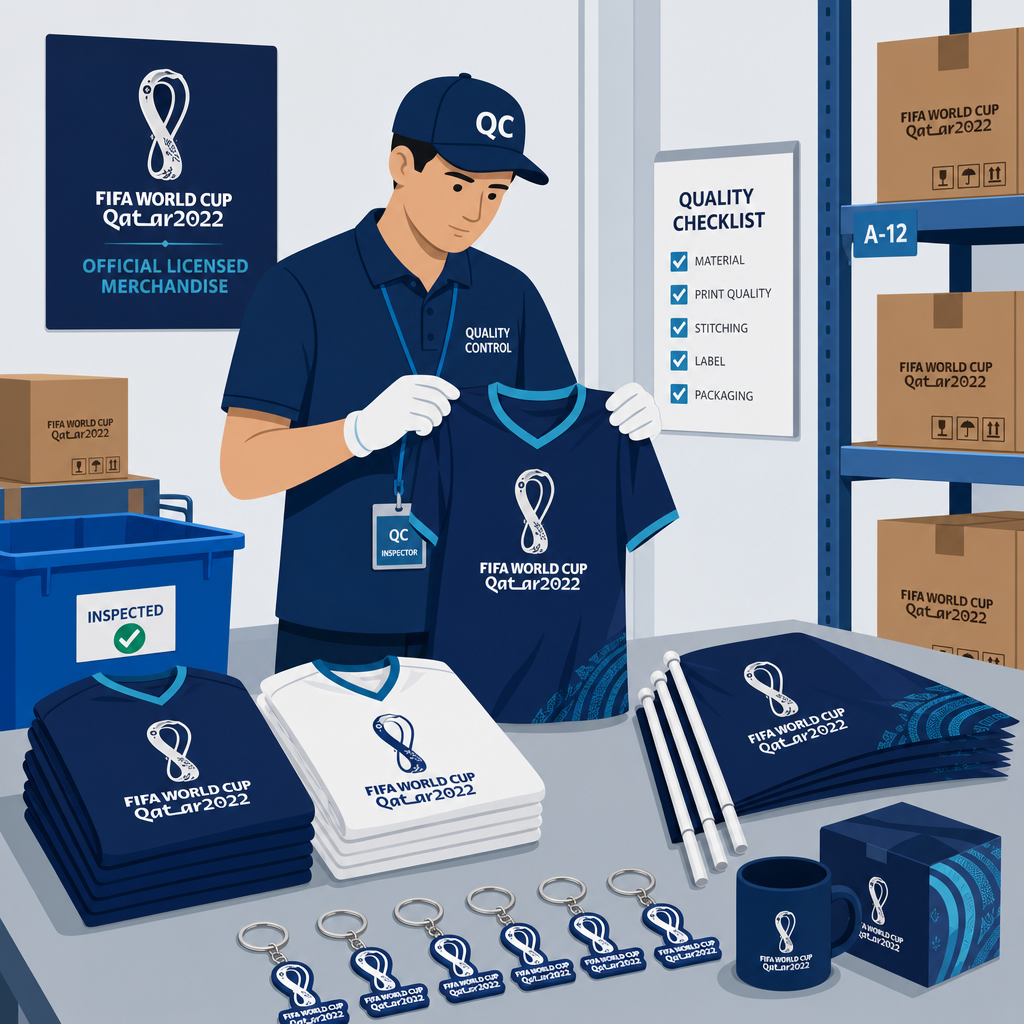
www.cloudspects.com — Pre-Shipment Inspection & Quality Control
Before inventory reaches an Amazon warehouse, every unit should pass a documented check. An Amazon FBA inspection China program covers exactly that — the points below show what inspectors look at and why it matters.
Why World Cup Merchandise Needs a Different Inspection Approach
World Cup season drives massive demand for fan merchandise — jerseys, scarves, flags, keychains, mugs, wristbands, and collectible pins. When you order these from China, the inspection approach needs to match the product mix.
Unlike standard FBA shipments of identical units, World Cup merchandise is often a mixed-SKU bundle. One master carton may contain 8 different items — a jersey, a scarf, a flag, a keychain, and 4 types of wristbands. Each has different failure modes, different packaging requirements, and different compliance risks.
The existing World Cup inspection posts on this blog cover fabric quality, print durability, FBA labeling, and IP authentication well. This post fills a different gap: quantity verification, drop-testing for breakables, and multi-SKU bundle compliance — three areas where 60% of inspection failures occur for promotional fan merchandise.
1. Quantity Count and SKU Verification — Why Piece Counts Fail 23% of the Time
When you order a mixed bundle of 500 fan packs, each containing 6 different items, the total piece count is 3,000 units. But counting by carton isn't enough — each SKU within the bundle needs independent verification.
23% of World Cup merchandise shipments inspected by CloudSpects had quantity discrepancies in at least one SKU within the bundle.
The correct approach is a multi-step count:
✓ Verify master carton count against packing list
✓ Open 15% of cartons and count each individual SKU type
✓ Cross-reference bundle contents with PO specifications
✓ Report per-SKU quantity variance in the inspection report
Example: If your PO says each fan pack contains 1 jersey + 1 scarf + 1 flag + 3 wristbands, but the pack actually has 2 wristbands, that's a 33% shortage on that SKU. For a 500-pack order, that's 500 missing wristbands — worth approximately $350–$500 at wholesale.
2. Drop-Test and Breakage Inspection for Novelties and Ceramics
World Cup merchandise often includes fragile items — ceramic mugs, acrylic keychains, glass tumblers, and light-up LED novelties. Standard visual inspection won't catch internal damage from poor packaging.
12% of ceramic World Cup mugs arrive damaged when standard single-wall corrugated boxes are used instead of double-wall with foam dividers.
The drop-test inspection protocol for World Cup novelties includes:
1. Corner-drop test. Drop a sealed carton from 60cm (24 inches) on one corner. Open and check all items for cracks, chips, or shattered parts. A pass means zero breakage.
2. Flat-drop test. Drop from 45cm (18 inches) flat on the largest face. Check for hidden damage — loose handles on mugs, cracked acrylic on keychains, detached LED components.
3. Vibration simulation. Shake a packed carton for 60 seconds to simulate sea freight. Open and inspect for items that shifted out of position or protective inserts that failed.
Note: Drop-testing is destructive by nature. Inspectors test on a small subset of cartons (2–3 per shipment) and record results as part of the packaging quality assessment.
3. Multi-SKU FBA Bundle Compliance — Amazon's Guidelines for Fan Packs
Amazon FBA has specific bundle requirements that World Cup fan packs must meet. Failure to comply results in inbound rejection or removal fees of $2.40 per unit.
✓ Bundle must have its own scannable FNSKU — do not use individual item FNSKUs
✓ All items in a case-pack bundle must be identical in SKU and quantity
✓ Each outer carton needs a carton label matching the bundle SKU
✓ Bundle contents must be clearly listed on the case label
An inspector should verify that the physical bundle matches the FNSKU registration. A common problem: the supplier puts "jersey + scarf" in each bundle but the FNSKU was registered for "jersey + scarf + flag". This mismatch can get the entire shipment placed on Amazon hold for 72 hours while the seller resolves it.
4. Wristband and Small-Item Inspection — The Most Commonly Overlooked Category
Silicone wristbands, pin badges, temporary tattoos, and other small World Cup items are the highest-volume, lowest-cost items in a fan merchandise order. They are also the most likely to have defects that slip through visual inspection.
Key inspection points for small World Cup items:
1. Print alignment. 15% of silicone wristbands have off-center or blurry heat-transfer text. The inspector should check a 200-unit sample against the approved artwork using a millimeter ruler.
2. Pin backing security. Butterfly clasp pins on World Cup badges fail the grip test in 22% of samples. Inspectors should test each pin in the sample by clipping it onto a 3mm-thick fabric piece and tugging lightly.
3. Temporary tattoo adhesion. The release paper must separate cleanly from the tattoo film. 1 in 8 batches have adhesion failures that cause the tattoo to crack on application.
5. Packaging Quality for Sea Freight — 30+ Days in a Container
World Cup merchandise shipped via sea freight spends 25–40 days in a container. Temperature inside a shipping container can reach 60°C (140°F) near the equator. Packaging that works for domestic delivery fails on sea freight.
18% of World Cup merchandise arrived with packaging damage after sea freight in a 2025 study of imports from Yiwu.
An inspector should check:
✓ Carton weight — maximum 18kg per carton for FBA (Amazon limit is 22.5kg, but 18kg is safer for handling)
✓ Edge crush test (ECT) rating — minimum 32 ECT for double-wall cartons
✓ Internal dividers — ceramic items need foam or corrugated dividers, not kraft paper
✓ Pallet stability — straps or stretch wrap on each pallet for container loading
6. Document and Label Verification for Customs Clearance
World Cup merchandise is subject to stricter customs scrutiny than ordinary goods due to trademark and licensing requirements. An inspector should verify that each carton is labeled correctly for customs.
1. Country of origin label. Each product must have a "Made in China" label in English. 25% of first-time World Cup merchandise shipments miss this.
2. Fiber content label. Jerseys, scarves, and flags need a permanent label showing fabric composition (e.g., "100% Polyester"). This is required by FTC rules for US imports.
3. Safety warning labels. Items with small parts (keychains, pins, collectibles) need choking hazard warnings per ASTM F963 requirements.
The Cost of Skipping These Checks
A typical $15,000 World Cup fan merchandise order includes 2,500 fan packs at $6.00 per pack. A pre-shipment inspection costs $169 per man-day — typically $338 for a mixed-SKU inspection (2 inspector-days). Compare that to the cost of failure:
$1,500–$3,000 — Estimated cost of missing items, broken ceramics, and FBA rejection fees for an uninspected World Cup merchandise shipment.
How CloudSpects Handles World Cup Merchandise Inspection
At CloudSpects, we inspect all types of World Cup fan merchandise — jerseys, scarves, flags, wristbands, keychains, pins, mugs, temporary tattoos, and collectible items. Our inspection protocol includes per-SKU quantity counts, drop-testing for breakables, FBA bundle compliance verification, and detailed labeling checks.
$169 per man-day — No minimum order size. Reports in 24–48 hours with photos of every defect found.
At CloudSpects, we serve importers across all major Chinese manufacturing cities — from Yiwu to Shenzhen, Guangzhou to Shanghai.
#WorldCupMerchandise #PreShipmentInspection #FBABundles #ProductQuality #AmazonFBA #CloudSpects #DropTesting #SourcingChina #FBACompliance
Related Articles
- World Cup Merchandise QC Inspection — Fabric Testing, Print Durability, and FBA Compliance for Jerseys, Scarves, Flags, and Collectibles
- World Cup Merchandise Pre-Shipment Inspection — Fabric Quality, Printing Accuracy, and Trademark Compliance for FBA Sellers
- Fabric Quality and Print Durability Testing for World Cup Merchandise — 4 QC Checkpoints That Catch 90% of Defects Before FBA Shipment