Your PO Is Sailing in Two Lots: How to Inspect and Pay When a Factory Splits an Order
Every year in the second week of September the email arrives with the same shape: we can finish about sixty percent before National Day, the balance after the holiday .
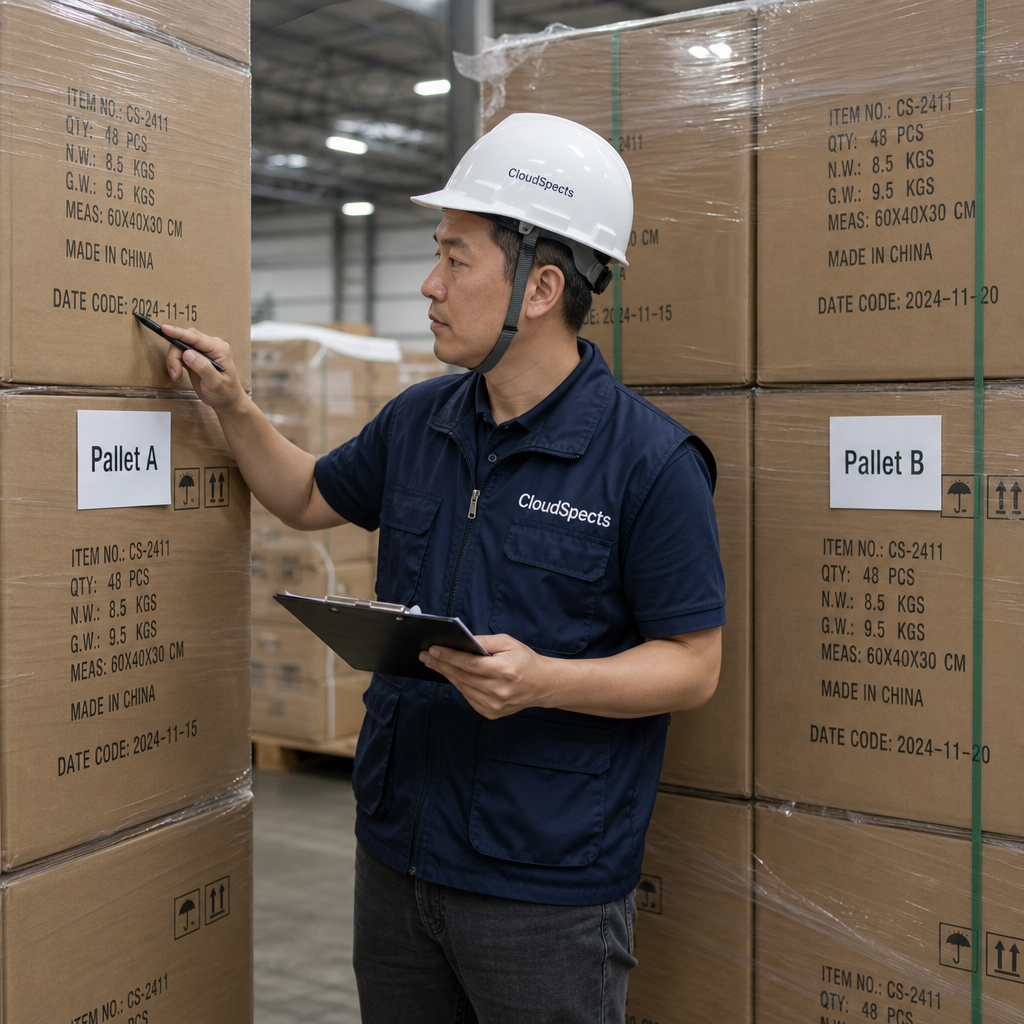
Every year in the second week of September the email arrives with the same shape: we can finish about sixty percent before National Day, the balance after the holiday. Nobody at the factory is being difficult. They are reading a calendar that includes an eight-day shutdown from 1 to 8 October, a booking crunch on the main lanes, and imported components that land when they land. The real question is not whether to accept a split shipment — often there is no alternative — but what a split does to your inspection, your payment schedule and your reviews if you handle two lots as though they were one order. 🧭
Why a September Split Is Normal, and Why It Still Costs 🗓️
A split shipment is one purchase order leaving on two vessels. Factories split for four ordinary reasons: the National Day holiday stops production for eight days; material for the tail of the order arrives late; a larger domestic order re-sequences your line; or the space you need is not available on a single sailing.
None of that is dishonest, and all of it pushes risk toward the newer, faster, less supervised part of the run. The units made in the ten days before a holiday are made in a rush. The units made in the first week back are made by a workforce that has just returned, often with temporary labour and a line that has to be re-set. Both are the windows where defects cluster — and both usually sit in the second lot.
The Five Checks That Keep a Split From Becoming a Loss 📋
| Check | What goes wrong without it | What to do instead |
|---|---|---|
| 1. Sampling per lot | The sample size is calculated from the PO total and all 200 units are drawn from the first shipment, so the second lot is never examined | Treat each sailing as its own lot with its own sample size, inspection visit and report; 3,300 units and 2,300 units are two lots, not one 5,600-unit lot |
| 2. Carton numbering and count | Two sets of cartons numbered from 1, and nobody can prove whether the forwarder received 300 or 286 | Continue numbering across lots (1-300, then 301-540) and match the packing list to the container count before the doors close |
| 3. Shipment and label mapping | Both lots land under one FBA shipment ID, so a defect found in the later lot forces you to quarantine clean inventory too | One shipment ID and one FNSKU carton set per lot, so a problem lot can be isolated without freezing the good stock |
| 4. Payment tied to each report | The balance is released against the PO total after the first lot passes, and the second lot is paid before anyone looks at it | Pay each lot against its own report and hold a retention until the final lot verifies — your leverage lives in the unpaid balance |
| 5. Re-verification, not assumption | "We inspected it, so the second half is the same" — and the good units get quietly moved to fill the later, riskier shipment | Inspect the second lot, and check the first lot's remaining cartons for raiding: counts and batch codes at the warehouse, not on paper |
What Actually Breaks on the Waiting Half 🎯
The most common failure is not a disaster, it is arithmetic. A factory that is short of units to fill the second booking has three options: produce more, delay the booking, or move units from a stock position. The third option is free and invisible, and it is how a purchase order acquires a third production date. This is why a date-code audit on the second lot matters more than a second lecture about quality.
The second failure is the storage clock. Finished goods sitting in a warehouse from late September to late October sit through a humid month: master cartons soften and lose stacking strength, dust settles on unsealed product, and every restack to reach the back of the pile is another chance to crack a housing or crush a corner.
The third is the restart. The first three days after Golden Week are not a normal production day. Inspectors who work this season know to look at who is on the line, whether the fixtures were re-set, and whether the rework from before the holiday is being finished alongside new production — usually on the same stations.
Case: 5,600 Pedestal Fans in Two Lots 📊
🔎 An importer booked 5,600 sixteen-inch oscillating pedestal fans, FOB $18.40 per unit, $103,040 in total, with a September sailing. The factory proposed 3,300 units before the holiday and 2,300 after.
The first lot was inspected properly: AQL 2.5, 200 units drawn from sealed cartons, three majors at 1.5%, all cosmetic. It sailed on the 22nd. The importer then skipped the inspection on the second lot to save one man-day and protect the booking. The second lot was produced during the first week back, with new temporary labour and a re-set line: it arrived with 8.4% majors. The oscillation gear was slipping within twenty minutes on the test jig because the gear housing had been switched to a lower-grade material to make up time, 6% of cartons were short the base screw pack, and the blade guards on 4% of units measured 0.6 mm against a 0.8 mm specification.
On a US return rate that settled near 7% for the affected units, the cost landed around $3,550 in refunds before removal fees and the assembly complaints. One man-day of inspection on that lot would have cost $169, and a three-day rework at the factory — with the balance still unpaid — would have cost nothing like the returns. The next order the same importer placed used a during-production check 20% into the post-holiday run: the swapped gear housing was caught at 400 units, the supplier reverted to the approved part at its own cost, and the shipment sailed on schedule. Two visits, $338, against a four-figure returns bill and a rating slide in the busiest quarter of the year. Read what a Amazon FBA inspection China visit covers at each stage, or see how we scope a split-order inspection.
FAQs
Is a split shipment a bad sign from a Chinese supplier?
Not by itself. In September and October most factories split orders because of the National Day shutdown, late components or scarce booking space. It becomes a problem when the two lots are inspected as one, paid as one and shipped under one FBA shipment ID, because the second lot is usually produced under more pressure than the first.
How is AQL applied when an order ships in two lots?
Per lot, not per purchase order. If 3,300 units ship first and 2,300 later, each is its own lot with its own sample size under AQL 2.5 Level II, its own inspection visit and its own report. Sampling 200 units from the first lot and calling the whole PO verified leaves the entire second lot unchecked.
Should I pay the balance when the first lot passes inspection?
Pay against the report for the lot that was actually inspected, and keep a retention for the balance of the order until the final lot verifies. Releasing the full balance after the first lot means the second, riskier lot is paid before anyone has looked at it, and your last piece of leverage is gone.
What goes wrong on the second lot produced after the holiday?
The first week back is the highest-risk production window of the year: a workforce that has just returned, temporary labour, a line that must be re-set, and rework backlog competing for the same stations. Across 2,000+ inspections a year we see defect rates on that first post-holiday run clearly above a mid-run baseline.
Can I simply refuse a split and wait for the full order?
Sometimes that is right, but it can push you past the Q4 receive window. The practical middle path is to accept the split with a written addendum: quantities and dates per lot, an inspection clause for each lot, carton numbering continuing across lots, and a separate FBA shipment ID per lot so a bad lot can be quarantined.
Book the Second Lot Before It Books Itself
CloudSpects inspects in China from $169 per man-day, with the report typically inside 24 hours of the visit and photographs that show the instrument next to the defect. Size the sample for each lot with the AQL calculator, or send us your PO, both sailing dates and the quantities and we will build a visit plan per lot.
Frequently asked questions
Is a split shipment a bad sign from a Chinese supplier?
Not by itself. In September and October most factories split orders because of the National Day shutdown, late components or scarce booking space. It becomes a problem when the two lots are inspected as one, paid as one and shipped under one FBA shipment ID, because the second lot is usually produced under more pressure than the first.
How is AQL applied when an order ships in two lots?
Per lot, not per purchase order. If 3,300 units ship first and 2,300 later, each is its own lot with its own sample size under AQL 2.5 Level II, its own inspection visit and its own report. Sampling 200 units from the first lot and calling the whole PO verified leaves the entire second lot unchecked.
Should I pay the balance when the first lot passes inspection?
Pay against the report for the lot that was actually inspected, and keep a retention for the balance of the order until the final lot verifies. Releasing the full balance after the first lot means the second, riskier lot is paid before anyone has looked at it, and your last piece of leverage is gone.
What goes wrong on the second lot produced after the holiday?
The first week back is the highest-risk production window of the year: a workforce that has just returned, temporary labour, a line that must be re-set, and rework backlog competing for the same stations. Across 2,000+ inspections a year we see defect rates on that first post-holiday run clearly above a mid-run baseline.
Can I simply refuse a split and wait for the full order?
Sometimes that is right, but it can push you past the Q4 receive window. The practical middle path is to accept the split with a written addendum: quantities and dates per lot, an inspection clause for each lot, carton numbering continuing across lots, and a separate FBA shipment ID per lot so a bad lot can be quarantined.