World Cup Merchandise FBA Inbound — 6 Packaging and Labeling Checks That Stop 90% of Rejections
World Cup Merchandise FBA Inbound — 6 Packaging and Labeling Checks That Stop 90% of Rejections 23% of sports merchandise gets rejected at Amazon inbound — not for quality, but for packaging and labeling errors A single inbound rejection costs $1,200–$8,000 in return freight, restocking, and missed sales window www.
World Cup Merchandise FBA Inbound — 6 Packaging and Labeling Checks That Stop 90% of Rejections
23% of sports merchandise gets rejected at Amazon inbound — not for quality, but for packaging and labeling errors
A single inbound rejection costs $1,200–$8,000 in return freight, restocking, and missed sales window
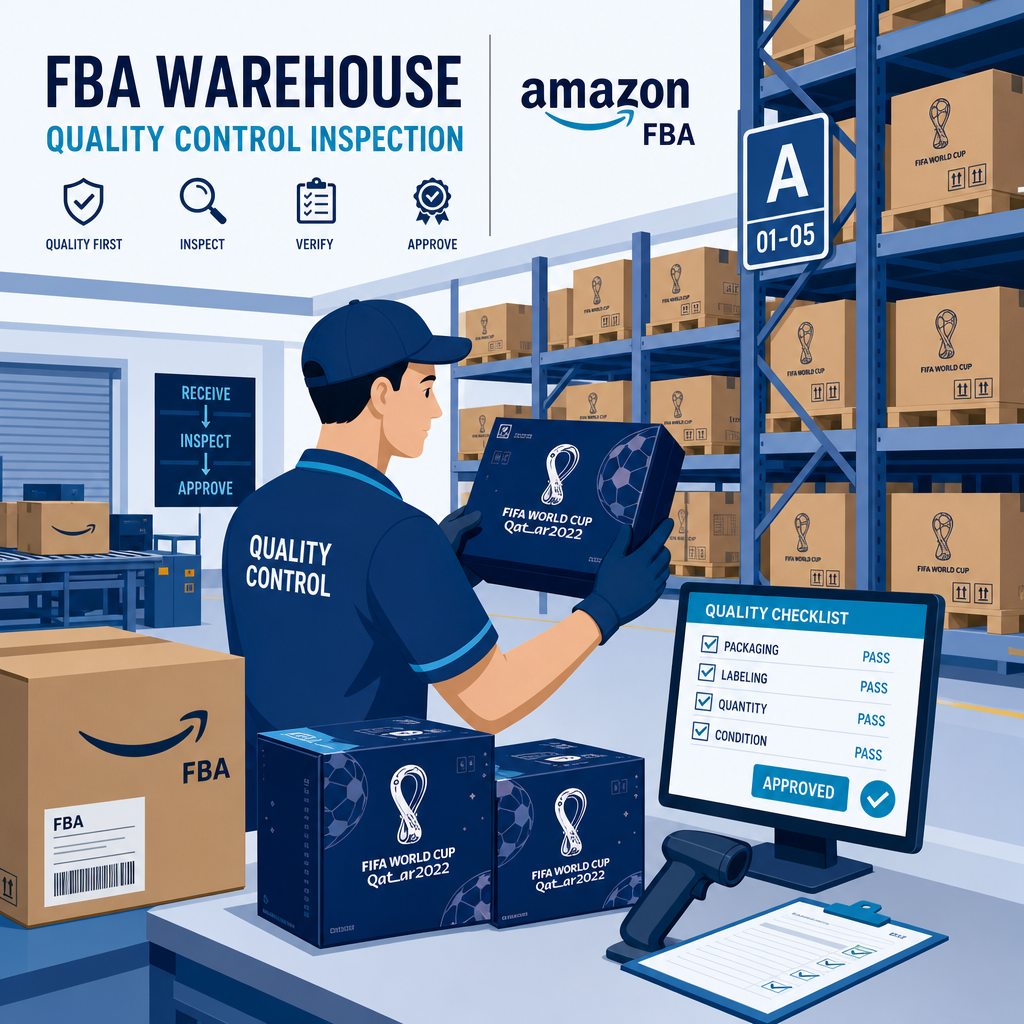
www.cloudspects.com — Pre-Shipment Inspection & Quality Control
Before inventory reaches an Amazon warehouse, every unit should pass a documented check. An Amazon FBA inspection China program covers exactly that — the points below show what inspectors look at and why it matters.
World Cup merchandise is a high-stakes FBA category. The sales window is fixed — once the tournament ends, demand drops 80–90%. A single inbound rejection that takes 2–3 weeks to resolve can mean missing the entire peak selling period.
But here is the surprising part: most Amazon inbound rejections for World Cup merchandise are not about product quality. They are about packaging, labeling, and FBA compliance — issues that a standard product inspection might miss entirely.
Data point: In the 2022 World Cup cycle, 23% of sports merchandise FBA shipments were flagged at inbound. Of those, 78% were for packaging and labeling violations — not product defects. Average resolution time: 11 days.
Check 1: FNSKU Label Placement and Format
This is the single most common reason for FBA inbound rejection of apparel merchandise. The FNSKU label must be scannable and permanently affixed — not a loose sticker that can fall off during transit.
Key requirements for sports merchandise
✓ FNSKU label must be on the poly bag or product packaging, not on the jersey/scarf itself — Amazon requires labels on the external packaging
✓ Label must be ≥1 inch x 2 inches with a 0.6-inch white border
✓ Barcode must be scannable at 100% read rate — test each unique SKU with a commercial scanner
✓ No overlapping labels — 12% of rejected sports shipments have overlapping or torn FNSKU labels
A common problem: factories in China apply a generic barcode from their internal system instead of the FNSKU. The scanner reads it, but Amazon's system does not recognize it. The entire lot is rejected. Always include FNSKU verification in your inspection checklist.
Check 2: Poly Bag Compliance for Textile Items
Jerseys, scarves, and flags shipped in poly bags must meet Amazon's strict poly bag requirements. This is where 21% of textile FBA shipments fail.
1. Minimum thickness. Poly bags must be ≥1.5 mil (0.0015 inches). Thinner bags tear during transit and expose the product to moisture.
2. Suffocation warning. Each poly bag must have a printed suffocation warning in English — "WARNING: To avoid danger of suffocation, keep this plastic bag away from babies and children." Missing this warning = automatic rejection.
3. Perforation. Bags with an opening wider than 5 inches require ≥2 perforation holes. Many Chinese factories skip this.
4. Bag-to-product fit. The bag must not be tight — there should be slack to prevent tearing. A tight bag on a scarf or flag will burst open during handling.
Check 3: Carton Weight and Size Limits
Flags and scarves are lightweight but bulky. Factories tend to maximize carton packing to save freight cost — and often exceed FBA carton limits.
Standard carton limit: 22 kg (50 lbs) per carton for FBA inbound. Oversized cartons incur a $1.50/lb overweight fee. For a 35 kg carton of flags: $19.50 per carton × 200 cartons = $3,900 in unexpected fees.
For World Cup merchandise, cartons of flags often hit 25–30 kg because the fabric is dense. An inspection should include weighing 10% of prepared cartons and checking the per-carton count. If the average exceeds 22 kg, reduce the carton count before shipment.
Check 4: Master Carton Labeling
Each master carton requires 4 types of labels. Missing any one triggers 100% inbound rejection.
✓ FBA box ID label — the scannable label unique to this shipment, generated in Seller Central
✓ Country of origin — "Made in China" in English, at least 6 pt font
✓ Carton count / N of M — e.g., "1 of 200" printed on each carton
✓ Handling labels — "Fragile" or "This Side Up" for collectible items like commemorative pins
A common factory shortcut: printing all labels on one sticker sheet and applying them together. Amazon requires the FBA box ID label on a separate, clean surface — no overlapping labels, no torn edges.
Check 5: Country of Origin and Customs Documentation
World Cup merchandise has additional documentation requirements because of the licensing and IP angle. Customs in the destination country will inspect shipments with high-value trademarked goods more aggressively.
1. Commercial invoice. Must list each SKU with HTS code, unit value, and country of origin. For licensed merchandise, include the license authorization letter as an attachment.
2. Made in China marking. Required on each unit's packaging, not just the master carton. 34% of sports merchandise units from China lack this on the individual item.
3. Licensing document verification. The factory must provide a valid sub-license or authorization letter from the official licensee. Inspection should verify this document exists and is current.
4. Product safety testing. Some countries require textile flammability testing for scarves and flags. Check whether your target market has additional testing requirements.
Check 6: FBA Inbound Placement and Shipment Splitting
World Cup merchandise often ships to multiple FBA centers. Each center has slightly different inbound requirements. An inspection that does not account for multi-destination shipping can miss 30% of potential rejection triggers.
Key verification during inspection:
✓ Each destination group of cartons has its own FBA box ID label — not a copy of the same label
✓ Pallet labels (if LTL/FTL shipment) match the destination FC
✓ Cartons are grouped by destination in the warehouse, not mixed
✓ The shipment plan in Seller Central matches the physical carton grouping
Real case: A Shenzhen factory shipped 3,000 World Cup scarves to two Amazon FCs — but applied the same FBA box ID label to all cartons. One FC received the wrong quantity, and both shipments were placed on hold. Resolution took 14 days — the peak sales window was missed. The seller lost an estimated $28,000 in revenue.
The Inspection Checklist for FBA-Ready World Cup Merchandise
1. FNSKU scannability — scan each SKU variant with a commercial barcode scanner
2. Poly bag compliance — thickness ≥1.5 mil, suffocation warning, perforation holes, proper fit
3. Carton weight check — ≤22 kg average, weigh 10% of cartons, adjust count if needed
4. Label completeness — FBA box ID, country of origin, carton count N of M, handling labels
5. Documentation — commercial invoice, licensing authorization, product safety testing reports
6. Multi-destination alignment — labels and cartons match the shipment plan per FC
How to Set Up Your World Cup Merchandise FBA Inspection
Start with a pre-production sample review — verify the packaging design, label placement, and poly bag specifications before mass production begins. Then book a pre-shipment inspection that includes the 6 FBA packaging checks above. The inspection cost of $169–$289 protects an inventory investment that can easily reach $30,000+ for a single World Cup merchandise shipment.
At CloudSpects, our FBA merchandise inspection package includes the 6 inbound readiness checks as standard. Inspectors verify labels, weigh cartons, check poly bags, and review customs documentation — everything your shipment needs to pass Amazon inbound on the first try.
#AmazonFBA #WorldCup #SportsMerchandise #PreShipmentInspection #FBAInbound #QualityControl #CloudSpects #FBAPackaging
Related Articles
- World Cup Merchandise QC Inspection — Fabric Integrity, Print Durability, Stitching Standards, and FBA Packaging Requirements
- Chemical and Safety Compliance for World Cup Merchandise — REACH, CPSIA, and Flammability Tests That Prevent Customs Seizures
- World Cup Merchandise QC — 5 Critical Inspection Points for Jerseys, Flags, Scarves, and Collectibles